
History shapes our understanding of faith. This academic piece explores the 4th-century ecclesiastical councils to understand how modern doctrines were formalized. Our research reflects the Islamic emphasis on pure monotheism, presented here for sincere students of history.
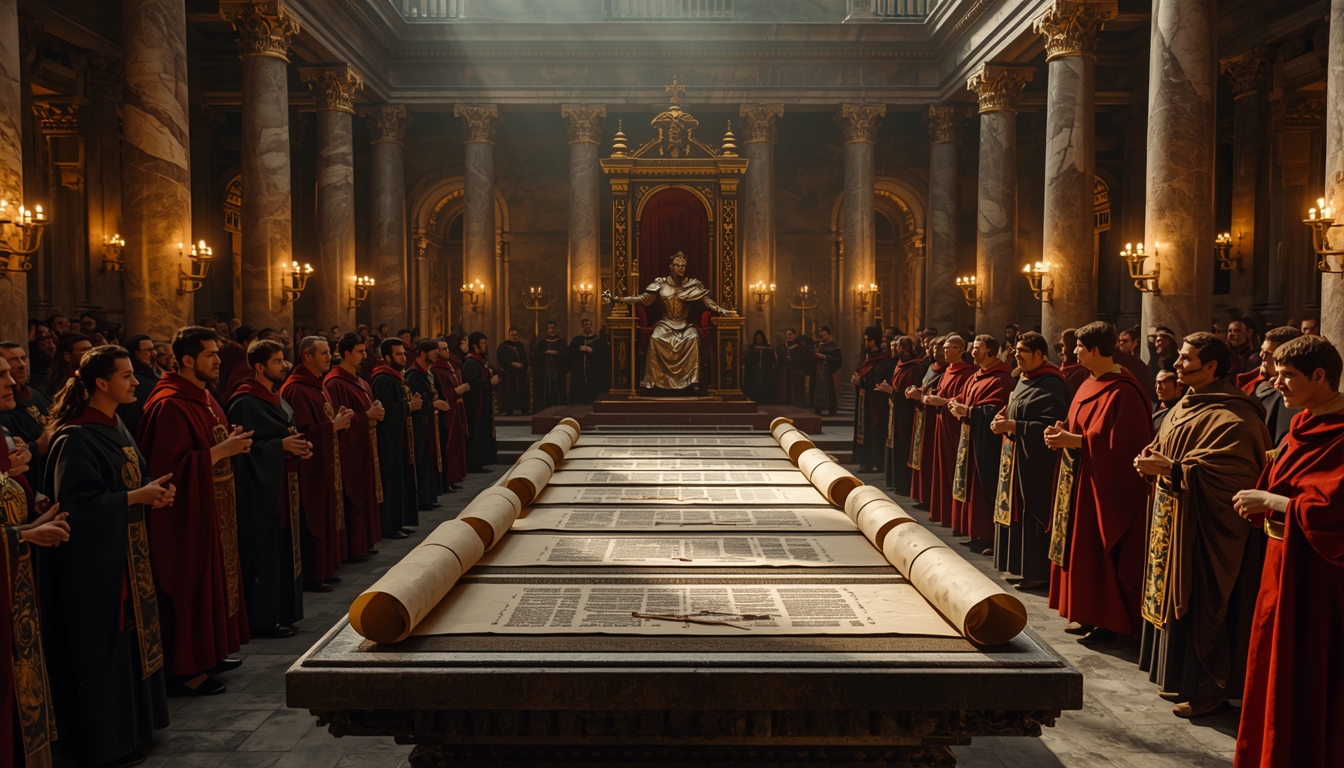
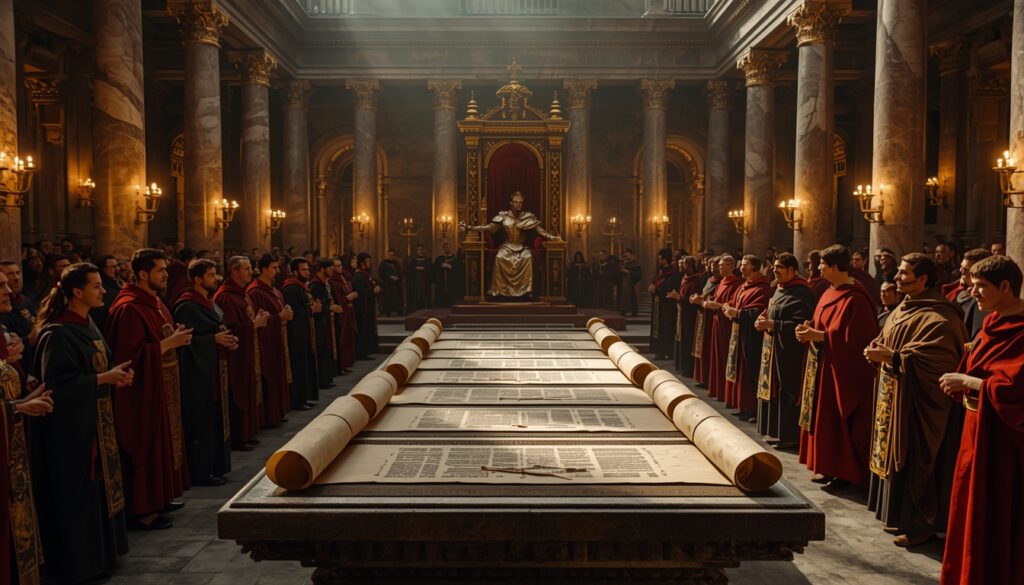
For the skeptical Western reader, the academic historian, or the student of religious evolution, the 4th century CE represents the most critical turning point in the history of the Abrahamic faith. At the heart of this transformation lies The Council of Nicaea, convened in 325 CE. While tradition often portrays this event as a harmonious gathering to clarify divine truth, a rigorous logical and historical inquiry reveals a much more complex reality: a high-stakes political and theological struggle where the original, pure monotheistic view of Jesus was systematically marginalized.
In the Islamic worldview, specifically the Sunni tradition, we recognize that Allah—the unique Creator who is High above His Heavens and established over His Throne—sent a continuous chain of prophets with one message: absolute monotheism. As we explored in the Islamic view on Jesus, Prophet Isa was a mortal messenger who never claimed divinity. The Council of Nicaea serves as the historical “bridge” where the Hebrew message of the Messiah was transformed into a Hellenistic mystery. This article explores seven profound logical realities of this council, demonstrating how political necessity and philosophical drift led to the outvoting of the original monotheistic truth.
Table of Contents
1. The Logic of Political Unity: Constantine’s Agenda
The primary driver behind The Council of Nicaea was not theological purity, but imperial stability. Emperor Constantine had recently unified the Roman Empire, but he found his subjects bitterly divided over the nature of Jesus. Logically, a divided church meant a divided empire.
Constantine, who was still the Pontifex Maximus of the pagan state religion at the time, viewed the “Arian Controversy” as a threat to public order. His logical goal was to achieve a consensus—any consensus—that would stop the rioting in the streets of Alexandria and Antioch. By presiding over the council, the state effectively took control of the “Truth.” As documented by Britannica’s history of Constantine, the Emperor’s presence exerted immense pressure on the attending bishops to produce a unified creed. This political interference is a primary reason why the Islam and Secularism dialogue identifies the dangers of merging state power with the definition of divine essence.
2. The Minority Report: The Logic of Arius and Pure Monotheism
A profound reality of The Council of Nicaea is that the “Arian” view—which held that Jesus was a created being and subordinate to the Father—was not a fringe heresy, but a widely held belief among the earliest eastern churches. Arius argued from a position of strict logic: if the Father begat the Son, then the Father must have existed before the Son. Therefore, there was a time when the Son did not exist.
Logically, this view aligns with the Concept of God in Islam as the Uncreated First Cause. Arius sought to protect the absolute oneness of God from being compromised by a “second” divine entity. However, at Nicaea, this logical monotheism was outvoted by a faction that favored a more mystical, co-equal definition. By marginalizing the Arian logic, the council paved the way for the eventual deification of a human messenger, a shift that Islam would later correct through the Authenticity of the Quran.
3. The Hellenistic Takeover: Greek Philosophy vs. Semitic Prophecy
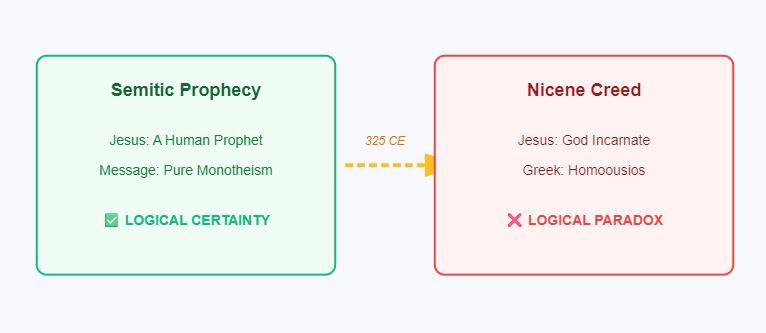
To the skeptical researcher, The Council of Nicaea represents the final triumph of Greek philosophy over Semitic revelation. The introduction of the term Homoousios (of the same substance) to describe the relationship between Jesus and God was a revolutionary move. This term was not found in any previous scripture; it was a concept borrowed from Gnostic and Platonic thought.
Logically, when you change the vocabulary of a religion, you change the religion itself. By forcing the Semitic message of Prophet Isa into the mold of Greek metaphysics, the council created a “Binary Choice” that Jesus himself never presented. This linguistic drift—as analyzed in the Preservation of the Bible and Quran—is what led to the theological paradoxes of the Trinity. Islam restores the Semitic logic: the Creator is the Master, and the Prophet is the Servant, without any shared “substance.”
4. The Logic of the “Outvoted” Truth: A Statistical Verdict?
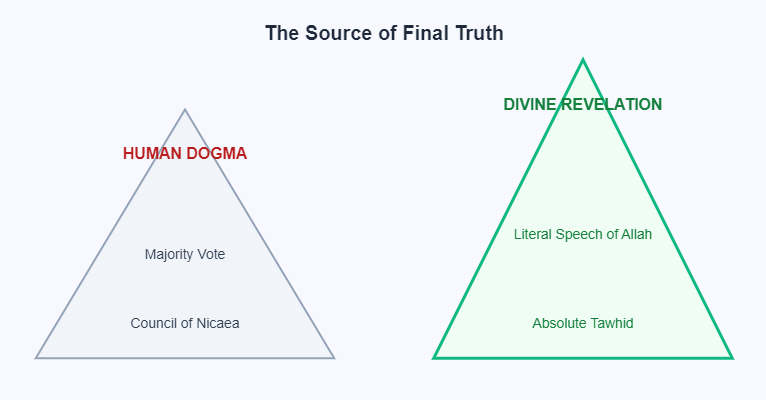
One of the most provocative realities of The Council of Nicaea is that the final Creed was decided by a show of hands. Of the estimated 1,800 bishops in the empire, only about 318 attended. Most of these were from the West or regions influenced by Roman politics.
Logically, can the nature of the Infinite Creator be determined by a majority vote of limited humans? In the Sunni tradition, we recognize that the truth is not subject to “Democracy,” but to Divine Revelation. The fact that many bishops signed the Nicene Creed only under the threat of exile by Constantine proves that the “Consensus” was manufactured. This historical pressure is a hallmark of how human desire often attempts to “Vote” away the unchangeable Worship in Islam of the One True God.
5. The Exclusion of the “Judeo-Christian” Voice
A profound logical failure of The Council of Nicaea was the total exclusion of the voices closest to the historical Jesus—the Jewish Christians. By the 4th century, the Gentile (Pauline) branch of the church had become the dominant political force, while the original followers who kept the Law and viewed Jesus as a human prophet had been marginalized.
Logically, the people who shared the culture, language, and lineage of Jesus—as explored in Was Jesus a Muslim?—would have the most accurate understanding of his status. By ignoring this “Semitic Root,” the Council was free to construct a new, Roman-compatible deity. Islam’s Muhammad in the Bible prophecies research shows that the original biblical message always pointed toward a human messenger, a truth that Nicaea attempted to bury under the weight of ecclesiastical tradition.
6. The Logic of Paradox: The Burden of the “God-Man”
The The Council of Nicaea resulted in the official adoption of a logical contradiction: Jesus as fully God and fully man. For the rational seeker, this presents an insurmountable intellectual hurdle. Logically, the attributes of the Creator (Omniscience) and the attributes of the man (limited knowledge) cannot exist in the same person simultaneously.
As we discussed in the Logic of Miracles, a miracle is a suspension of a law, but a “Square Circle” is a logical impossibility. Affirming that Jesus was God while he himself admitted to not knowing the Hour is a violation of the Law of Non-Contradiction. Islam solves this “Identity Crisis” by returning to the unclouded logic of Tawhid: Jesus was a man of the highest spiritual rank, supported by miracles, but he remained a created being accountable to his Lord.
7. The Final Corrective: Why the Quran was Necessary
The final reality of The Council of Nicaea is that it created a historical necessity for a final, preserved revelation. If human councils can vote on the nature of God and edit the prophetic message—as analyzed in Contradictions in the Bible—then humanity no longer has a reliable map to the Creator.
Logically, if the Sincerity of the Prophets is to have any lasting impact, there must be a text that is immune to “Council-style” editing. The Quran, being the literal and uncreated Speech of Allah, serves as the Furqan (Criterion). It specifically addresses the errors of Nicaea: “O People of the Scripture, do not commit excess in your religion… The Messiah, Jesus, the son of Mary, was but a messenger of Allah” (Quran 4:171). This verse is the ultimate logical rebuttal to 325 CE, providing the Why Islam answer for every rational seeker.
Conclusion: Returning to the Pre-Nicene Truth
The scholarly investigation into The Council of Nicaea leads to a profound rational verdict: the divinity of Jesus was a political and philosophical victory, not a scriptural one. By outvoting the monotheistic Arians and adopting Greek metaphysical terms, the Roman Church moved away from the simple, powerful message of the prophets.
For the skeptical mind, Nicaea is a warning about the fragility of human-handled scripture. Islam does not offer a new truth; it offers the restoration of the original truth that was outvoted in the 4th century. By recognizing the Scientific Miracles of the Quran and its unchangeable nature, the seeker finds the “Truth Clearly”—the same truth that Jesus, Moses, and Abraham lived by: that there is no deity worthy of worship except Allah, the Most High, who is established over His Throne and knows the secrets of history and the hearts.











Leave a Reply