
This research paper is part of Truth Clearly’s commitment to providing an authentic Islamic perspective on theology and history. We adhere to rigorous academic standards, relying exclusively on the Quran, authentic Prophetic traditions, and verified historical sources to provide clarity for the rational seeker.
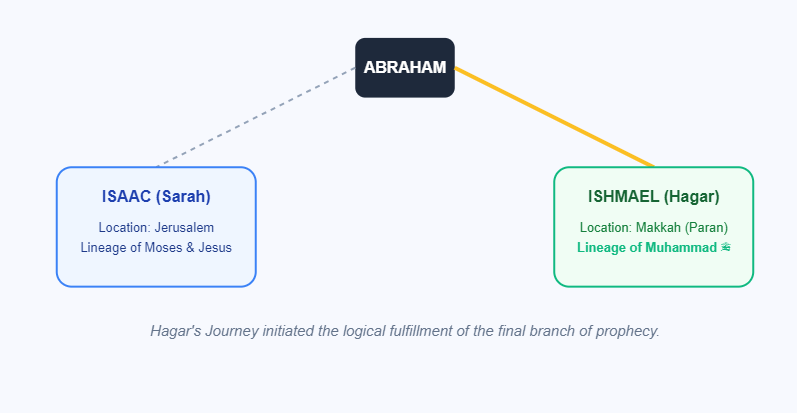
The narrative of Abraham and his family is the foundational bedrock of global monotheism. However, one specific chapter of this history remains a point of intense curiosity and theological debate: the displacement of Hagar and her infant son, Ishmael, into the desert. For the skeptical Western reader, the student of biblical history, or the rational seeker, Hagar’s Journey into the parched wilderness of Arabia often seems like a tragic domestic exile driven by jealousy. Yet, when we apply a rigorous logical and scriptural lens, it becomes clear that this journey was a calculated divine orchestration—the necessary prerequisite for the emergence of the final chapter of revelation.
In the Islamic perspective, we recognize that Allah—the Most High, who is distinct from His creation—does not act without infinite Wisdom (Hikmah). He spoke the Quran as His literal Speech to clarify the truths that were obscured by time and human intervention. Hagar’s Journey was not an accident of history, but a “Sacred Migration” intended to establish a new spiritual center for humanity. This article explores seven profound logical realities that demonstrate why the destination of Hagar’s Journey—Makkah—is the true destined heart of Abrahamic prophecy, linking the ancient past to the finality of the Islamic message.
Table of Contents
1. The Logic of Paran: Identifying the Biblical Wilderness
The primary logical pillar of Hagar’s Journey is the geographical identification of the “Wilderness of Paran.” The Bible states that after leaving Abraham’s household, Hagar and Ishmael dwelt in the Wilderness of Paran (Genesis 21:21). Logically, identifying the location of Paran is essential to understanding where the blessing of the firstborn was to manifest.
While some modern interpretations attempt to place Paran near the Sinai Peninsula, the overwhelming historical and logical evidence points toward the Hijaz region of Arabia, specifically Makkah. Traditional Arab and even ancient Jewish sources identified Paran with the mountains of Makkah. Furthermore, as we analyzed in Muhammad in the Bible prophecies, the “Glory from Mount Paran” mentioned in Habakkuk and Deuteronomy refers to a majestic revelation arising from this specific desert. Hagar’s Journey was the physical act of planting the seed of the Ishmaelite lineage in the exact geographical location where the “Final Light” would eventually shine.
2. The Miracle of Zamzam: The Biological Necessity of a Sanctuary
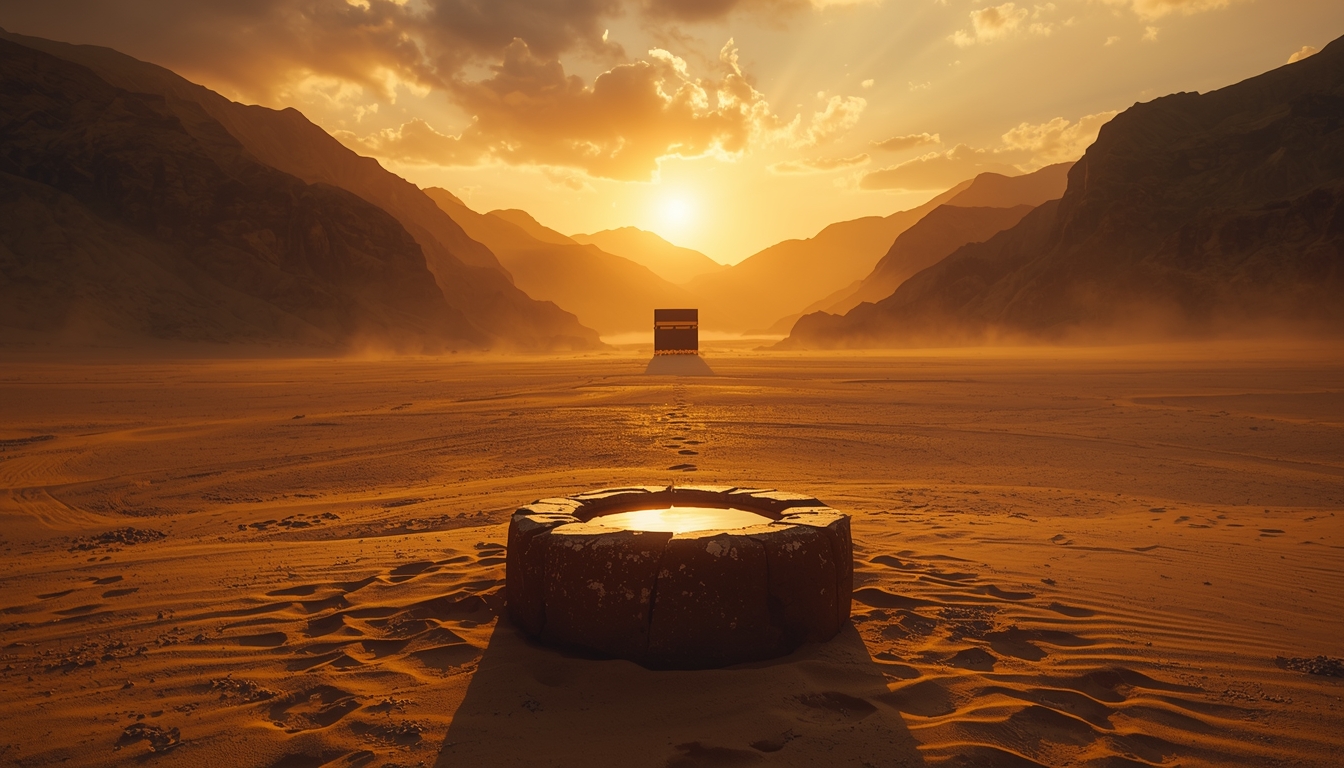
Logically, no civilization or permanent settlement can emerge in a barren desert without a consistent source of water. Hagar’s Journey would have ended in tragedy if not for a direct supernatural intervention. Both the Islamic and Judeo-Christian traditions record the appearance of a spring of water to save Hagar and her son.
In Islam, this is the well of Zamzam. The logical significance of Zamzam is that it provided the “Infrastructure of Prophecy.” Without this water, the city of Makkah could not have been established, and the tribe of Jurhum would never have settled there to protect and integrate with the young Ishmael. This biological reality aligns with the Scientific Miracles of the Quran and the The Water Cycle in the Quran, where water is the primary catalyst for life and community. Zamzam was the divine anchor that ensured Makkah would become a permanent hub for monotheistic Worship in Islam.
3. The Abrahamic Prayer: A Strategic Vision for Makkah
A profound reality of Hagar’s Journey is that it was the fulfillment of a specific logical petition made by Abraham. The Quran records Abraham’s words as he left his family in the uncultivated valley:
“Our Lord, I have settled some of my descendants in an uncultivated valley near Your sacred House… so make hearts among the people incline toward them and provide for them from the fruits that they might be grateful.” (Quran 14:37).
Logically, Abraham—the architect of pure monotheism—was acting under divine instruction to create a “Sanctuary of Purity” far removed from the idol-worshipping centers of Mesopotamia and Egypt. By placing Hagar in a remote valley, he was shielding the future lineage of the final Prophet from the theological corruptions of the surrounding empires. This strategic isolation was a necessary prerequisite for the eventual Authenticity of the Quran as a message that would remain unpolluted by later pagan philosophical syncretism.
4. The Genesis Promise: The Logic of the “Great Nation”
The study of Hagar’s Journey requires a logical analysis of the promises made in the Book of Genesis. Allah promised Abraham that He would make Ishmael a “Great Nation” (Genesis 17:20) and that He would bless him exceedingly.
Logically, a “Great Nation” in the prophetic and historical sense is not merely a populous tribe, but a nation that carries a divine law, a global message, and a lasting civilization. While the branch of Isaac produced many prophets and the Torah, the branch of Ishmael remained “dormant” in the desert for centuries. Hagar’s Journey was the logical preparation for the “Seal of the Prophets.” The blessing of Ishmael was preserved in the desert until the world was ready for the final, universal revelation. This continuity is a recurring theme in Comparative Religion, where the “rejected branch” eventually carries the final light.
5. The Sa’i Ritual: Empirical Preservation of Hagar’s Struggle
In Islam, Hagar’s Journey is not just an ancient story; it is a living, annual ritual. During the 5 Pillars of Islamic Faith (specifically the Hajj and Umrah), millions of people perform the Sa’i—running between the hills of Safa and Marwa.
Logically, this ritual acts as a “Historical Evidence Lock.” By making the reenactment of Hagar’s search for water a mandatory act of worship, Islam ensured that the story of Makkah’s origins would never be forgotten or mythologized. This ritual continuity provides an empirical link between the modern believer and the ancient patriarchs. It reinforces the Sincerity of Prophet Muhammad in reclaiming the original Abrahamic heritage, proving that the roots of Makkah are deeply anchored in the historical struggle of Hagar.
6. Makkah as the “Mother of Cities” (Umm al-Qura)
A fascinating logical reality associated with Hagar’s Journey is the geographical status of Makkah. The Quran refers to it as Umm al-Qura (The Mother of Cities). From a logistical perspective, Makkah’s location was a “Design Choice.”
Logically, for a final revelation to reach the entire world, it needed to arise from a place that was both protected (by the vast desert) and connected (by ancient trade routes). Hagar was placed at the crossroads of the ancient world. This allowed the message of the final Prophet to spread rapidly toward the Roman and Persian empires once the revelation was complete. The Logic of Final Revelation required a center that was neutral, never colonized, and prepared for global leadership. Makkah, born from Hagar’s Journey, fulfilled this logical requirement perfectly.
7. The Logic of Completion: Raising the Foundations
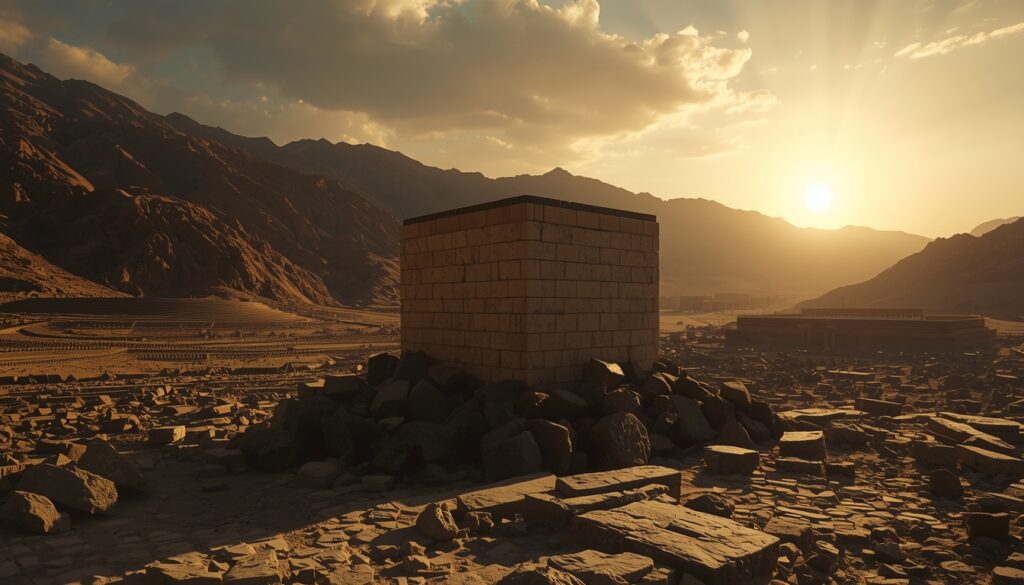
The final reality of Hagar’s Journey is the eventual reconstruction of the Kaaba by Abraham and Ishmael. The Quran states that they “raised the foundations” of the House (Quran 2:127). This implies that the site was already sacred and known before they arrived, possibly dating back to the first human.
Logically, Hagar’s Journey was a “Return to the Source.” By bringing his family back to the first house established for mankind (Quran 3:96), Abraham was completing a spiritual circle. This sanctuary provided the physical direction (Qibla) that we discussed in The Logic of Prayer. Makkah became the logical heart of prophecy because it was both the starting point and the ending point of the divine call to absolute monotheism. As we see in the Concept of God in Islam, the purity of worship requires a center that is unpolluted by human innovation.
Conclusion: The Finality of the Desert Journey
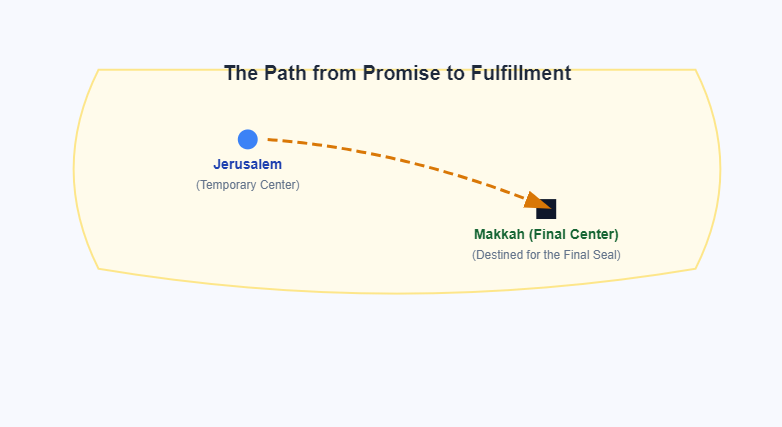
The scholarly inquiry into Hagar’s Journey leads to an inescapable rational verdict: the parched valley of Makkah was the intended climax of the Abrahamic promise. From the identifying logic of Paran to the miraculous spring of Zamzam and the strategic isolation of the desert, every element of Hagar’s experience was a sign of a higher, divinely mandated plan.
For the skeptical mind, the story of Hagar is an invitation to recognize that the Creator does not leave His servants in the wilderness without a purpose. Allah, the Most High, guided Hagar to the heart of the world to prepare the way for the Final Seal of the Prophets. By recognizing Makkah as the destined center of prophecy, the seeker finds the “Truth Clearly”—that the message of Islam is the logical and beautiful fulfillment of the journey that began four thousand years ago in the footsteps of a sincere woman in the desert.








Leave a Reply