
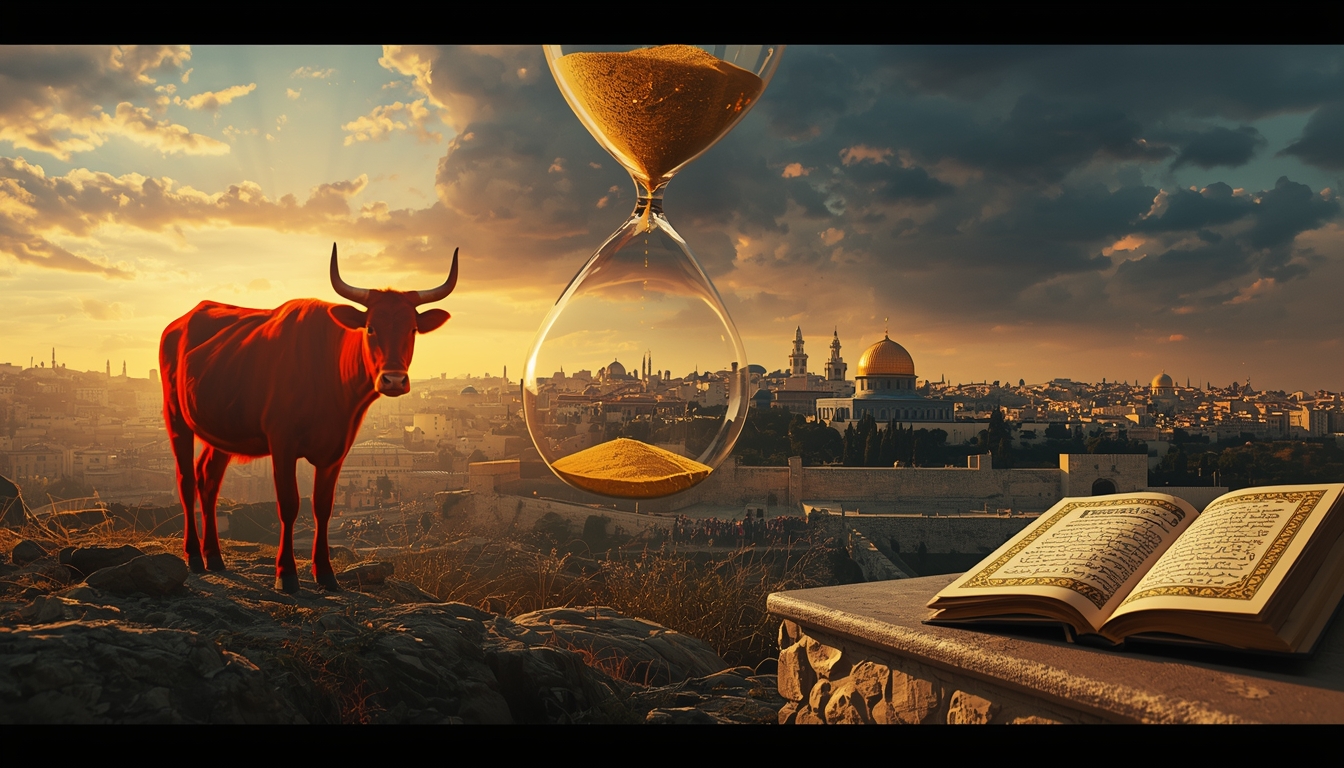
This research paper explores historical and eschatological prophecies within the Abrahamic faiths. Truth Clearly offers this comparative analysis to help students of religion understand how ancient scriptural interpretations shape contemporary theological thought.
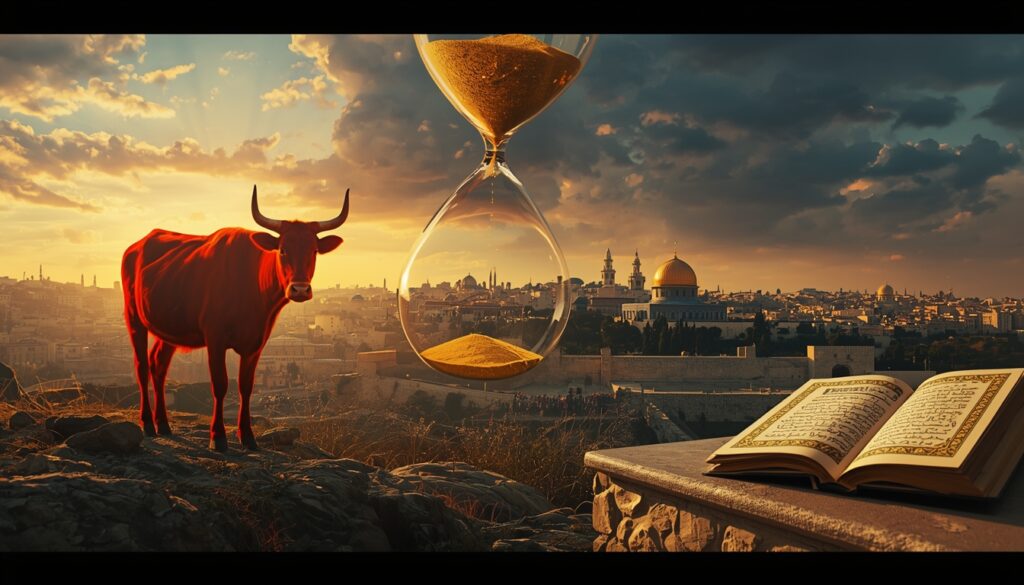
In the modern world of nuclear deterrence, artificial intelligence, and global trade, the idea that a religious ritual involving a rare animal could dictate international policy seems like a scenario from a historical novel. However, for the skeptical Western reader, the geopolitical analyst, or the student of theology, the current movements regarding The Red Heifer and the Third Temple present an undeniable and staggering reality. We are witnessing a moment where ancient eschatology is driving 21st-century military and political decisions.
To understand the logic behind these events, one must look past the secular headlines and delve into the intersection of Jewish law, Evangelical “Dispensationalism,” and the final Islamic revelation. This article explores seven profound logical realities of The Red Heifer and the Third Temple, analyzing how these prophecies are being utilized to accelerate a specific historical conclusion. In the Sunni Athari worldview, we recognize that while humans plot, Allah—the Most High, who is established over His Throne—is the ultimate Disposer of affairs. His Knowledge encompasses the end from the beginning, and His Authenticity of the Quran provides the final corrective to these unfolding events.
Table of Contents
1. The Ritual Logic: The Red Heifer as a Key to Purity
The primary logical pillar of the current movement toward The Red Heifer and the Third Temple is the Jewish concept of Tumat HaMet (Impurity of the Dead). According to the Torah (Numbers 19), anyone who has come into contact with a corpse—or has even been under the same roof as one—is considered ritually impure.
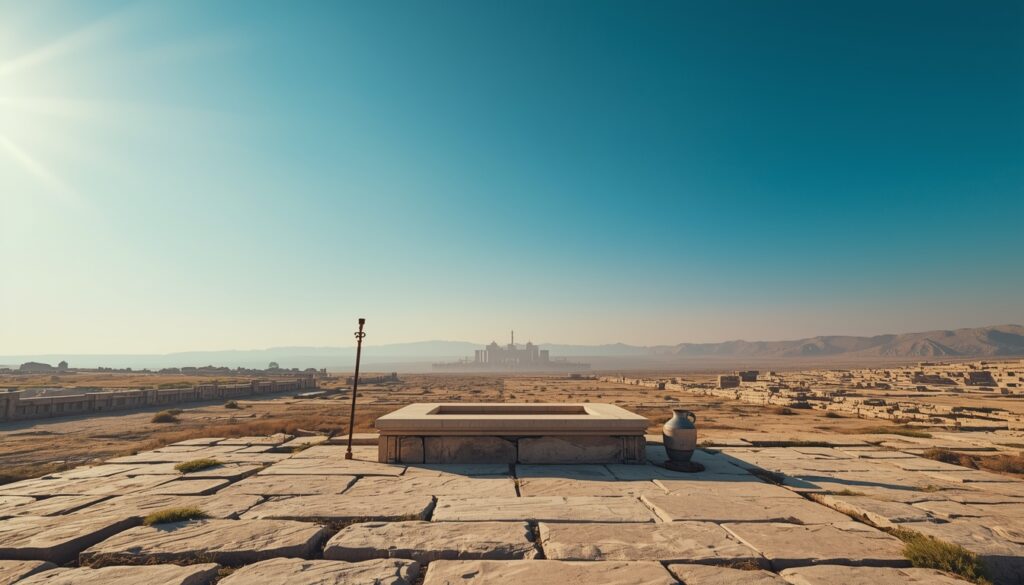
Logically, this presents a legal hurdle for the construction of a Third Temple. In Jewish law, no person can enter the sacred precincts or perform sacrifices while in a state of impurity. The only solution is the ashes of a “perfect red heifer” (Parah Adumah), which must be mixed with water and sprinkled on the people. Throughout history, only nine such heifers have been sacrificed. The arrival of five red heifers from Texas in 2022, now kept in a secure location in the West Bank, is the physical “starting gun” for the Temple project. For a rational seeker, this is not mere folklore; it is a calculated move to satisfy a legal requirement that has been dormant for 2,000 years.
2. Dispensationalism: The Evangelical Influence on Global Policy
A profound reality in the The Red Heifer and the Third Temple discourse is the role of American Evangelical “Dispensationalism.” This is a theological framework popularized by authors like Hal Lindsey in his book The Late Great Planet Earth, which sold over 35 million copies and significantly influenced the White House and the Pentagon.
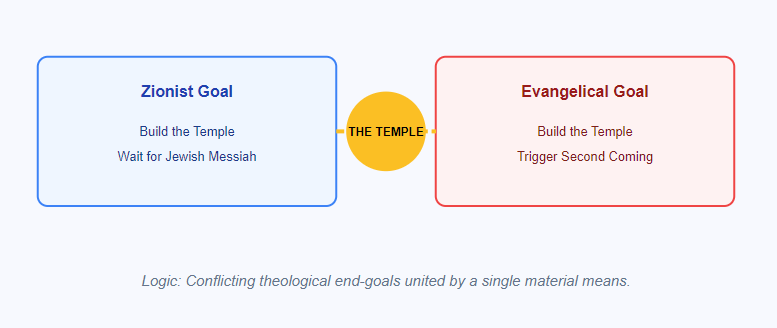
Dispensationalists believe that the physical rebuilding of the Temple is a prerequisite for the Second Coming of Jesus. Logically, this creates a strange and powerful alliance: millions of Christians supporting Zionist movements to build a Temple, despite having fundamentally different ultimate goals. This political-religious synergy is a primary driver behind modern Western support for policies that favor the Temple Mount’s restructuring. As we analyzed in Muhammad as a Leader, true leadership is anchored in divine truth, yet here we see leadership anchored in an accelerated attempt to “force” the hand of the Divine.
3. The Alliance of Contradictions: Means vs. Ends
The study of The Red Heifer and the Third Temple reveals a logical paradox. The Evangelicals support the Temple because they believe it will lead to a massive conversion of Jews to Christianity upon the return of the Messiah. The Zionist groups support the project because they believe it will usher in the Jewish Messiah and restore their sovereignty.
Logically, both sides are using each other as a “means” to a conflicting “end.” This alliance is temporary and precarious. From the Islamic perspective of Concept of God in Islam, Allah is the Only One who truly knows the outcome of these maneuvers. While these groups agree on the “medium” (the building), they are at total odds regarding the “message” (the identity of the Messiah). This tension is a central sign of the Signs of the Day of Judgment in Islam.
4. Geopolitical Decoding: Ezekiel 38 and the Axis of Power
Skeptics often wonder why modern wars are framed in ancient terms. The movement toward The Red Heifer and the Third Temple is often linked to the prophecy of “Gog and Magog” in Ezekiel 38. Modern Dispensationalists interpret “Ros” as Russia and “Persia” as Iran, suggesting an alliance that will attack the Levant before the Temple is built.
Logically, this provides a “prophetic cover” for modern military escalations. When we analyze Jihad vs Crusades, we see that modern “Dispensationalist” warfare often mirrors the zeal of the Crusades, justified by a specific reading of the end times. The Islamic view, however, remains grounded in the Sincerity of Prophet Muhammad, who warned that the Arabs would diminish in number during these great trials (Malhamah), a reality that aligns with the current pressure on regional powers.
5. The Neutralization of Egypt: The Isaiah 19 Logic
A startling reality in the context of The Red Heifer and the Third Temple is the prophetic view of Egypt. Dispensationalists often point to Isaiah 19, which speaks of a drying river and economic distress in Egypt, leading to a state of political neutrality.
Logically, for the Temple to be built and for the regional map to be redrawn, major neighboring powers must be neutralized or preoccupied. The current economic challenges and water security issues in the Nile valley—as we touched upon in The Water Cycle in the Quran—are seen by some as the fulfillment of this “neutralization” phase. This allows the focus of the world to remain fixed on the Al-Aqsa plateau without significant interference from traditional regional anchors.
6. The Islamic Corrective: Surah Al-Isra and Divine Justice
The The Red Heifer and the Third Temple narrative finds its most powerful logical response in the Quran. Surah Al-Isra (The Night Journey) speaks directly to the two periods of great “corruption” on the earth and the eventual entry of the believers into the Masjid (Al-Aqsa) as they did the first time.
Logically, if a system is built on the displacement of people and the desecration of a place of worship dedicated to Worship in Islam, it cannot sustain itself. The Quranic logic is: “If you return [to sin], We shall return [to punishment]” (Quran 17:8). In the Sunni Athari creed, we believe that Allah’s Justice is absolute. Any structure built on the site of Al-Aqsa through force is a temporal construct that will eventually crumble before the Divine Justice and Life After Death.
7. The Ultimate Evidence: The “True Temple” is Already Standing in the (Valley of Baca)
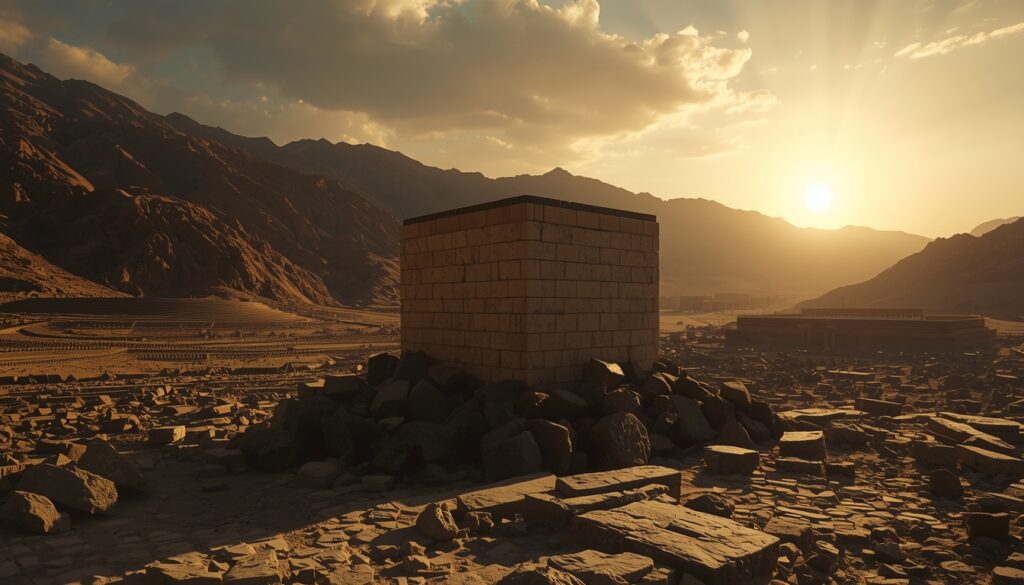
The most profound logical reality in the entire discourse of The Red Heifer and the Third Temple is the fact that the final and perfected House of God—the center of universal monotheism—is not a future project, but a present reality. While global attention is fixed on the ritual requirements of a heifer and the construction of stone walls in Jerusalem, a scholarly and linguistic inquiry into ancient scriptures reveals that the “True Temple” has already been established and preserved in the Arabian Peninsula.
The Linguistic Identity: Psalm 84 and the Valley of Baca
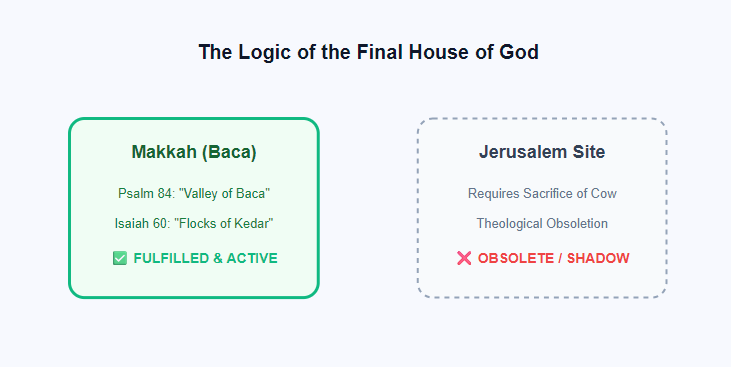
The Bible contains a specific geographical “smoking gun” that points directly to the spiritual center of Islam. In Psalm 84:6, the text describes the journey of the sincere believers toward the House of the Lord:
“As they pass through the Valley of Baca, they make it a place of springs; the autumn rains also cover it with pools.” (Psalm 84:6, NIV).
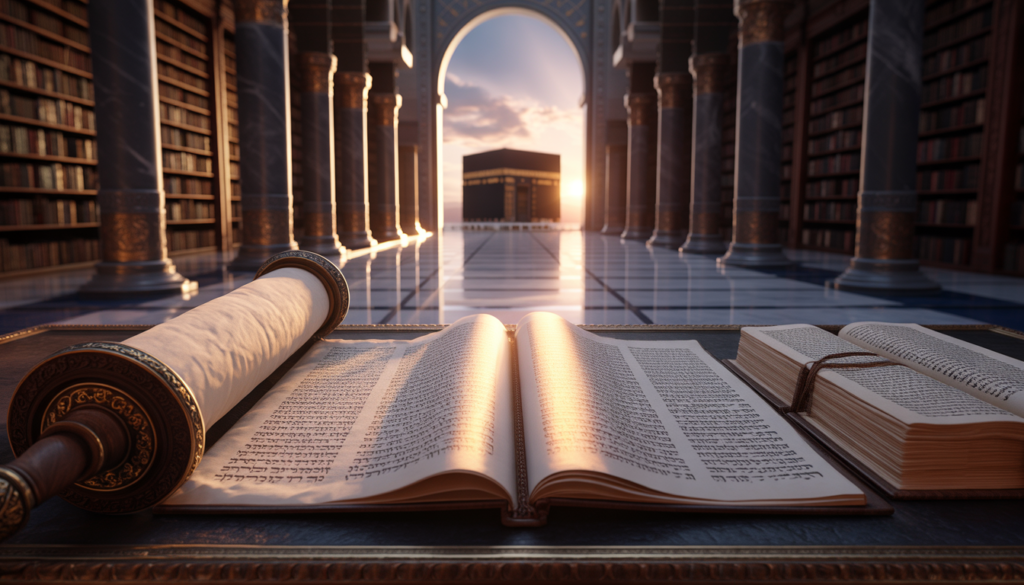
Logically, the word “Baca” (Hebrew: בָּכָא) is not a generic term for weeping; it is a proper noun for a specific geographical location. This aligns with staggering precision with the Quranic revelation 1,400 years ago, which identifies the location of the first House of God using the exact same name:
“Indeed, the first House [of worship] established for mankind was that at Bakka (Makkah)—blessed and a guidance for the worlds.” (Quran 3:96).
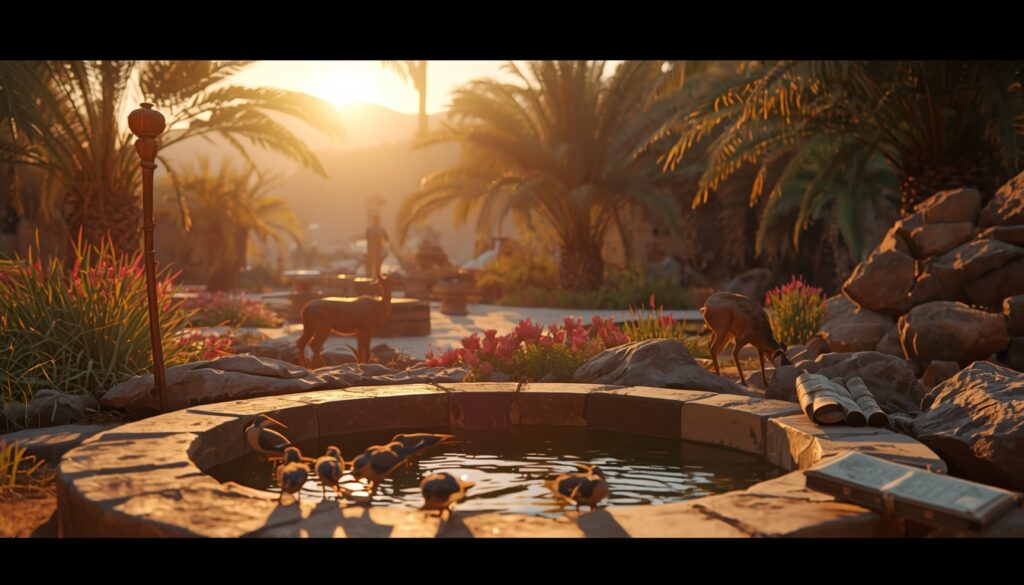
The logical correlation is undeniable. The “Valley of Baca” mentioned in the Hebrew Bible as the destination of pilgrims is the “Bakka” of the Quran. Furthermore, the Psalm describes it as a place where “springs” appear in a dry valley—a direct historical and logical reference to the Miracle of Zamzam, which transformed the parched valley of Makkah into a life-sustaining sanctuary.
The Flocks of Kedar: Isaiah’s Vision of the Final House
The Book of Isaiah provides further evidentiary layers that clarify the identity of the “Glorious House” of the end times. In Isaiah 60, the scripture speaks of a time when the light of God will shine upon a specific land and all nations will gather there:
“All the flocks of Kedar shall be gathered together unto thee, the rams of Nebaioth shall minister unto thee: they shall come up with acceptance on mine altar, and I will glorify the house of my glory.” (Isaiah 60:7, KJV).
For the skeptical researcher, the names Kedar and Nebaioth are the keys to the puzzle. According to Genesis 25:13, these are the firstborn and second-born sons of Ishmael. Historically, Kedar is the recognized ancestor of the Quraysh—the tribe of Prophet Muhammad. Logically, the only place on Earth where millions of “flocks of Kedar” (Arabian sheep) are gathered and sacrificed on a single altar as an act of worship to Allah is during the Hajj pilgrimage in Makkah.
This prophecy cannot logically refer to a Third Temple in Jerusalem for two reasons:
- The Mosaic animal sacrifice system became historically and theologically obsolete with the arrival of the final message.
- Jerusalem is not the land of Kedar; Makkah is.
The Red Heifer as a Logical Diversion
When we weigh the evidence, the current obsession with The Red Heifer and the Third Temple appears as a profound logical diversion. The groups attempting to build a Third Temple are essentially trying to “resurrect” a previous stage of divine law that has already been fulfilled and superseded.
The Islamic perspective affirms that Allah, the Most High, has already completed His favor upon humanity by establishing the Kaaba as the Qibla (direction) for all people. The Authenticity of the Quran ensures that this ‘House of Glory’ remains preserved and unpolluted by idols. By recognizing the linguistic link in the Psalms and the genealogical link in Isaiah, the rational mind must conclude that the search for a new temple is an act of missing the ‘Truth Clearly’ that is already standing. Makkah is the final, perfected, and universal sanctuary promised to the descendants of Abraham, fulfilling the Logic of Final Revelation for all of mankind.
Conclusion: Awareness in an Era of Deception
The movement toward The Red Heifer and the Third Temple is more than a fringe religious project; it is a central pillar of modern global geopolitics. By recognizing the ritual requirements of purity, the influence of Dispensationalism, and the Quranic corrective, the rational seeker can see the “Truth Clearly.”
For the skeptical mind, the data suggests that we are living in the “Era of the Signs.” However, the path to peace is not through the sacrifice of a heifer or the construction of stone walls, but through the Why Islam answer: the return to the worship of the One True God, the Most High, who is High above His Heavens. As we navigate these turbulent times, let us remember that the true “Third Temple” is the heart of the believer that remains firm on the Logic of Free Will and the sincere following of the Final Messenger.








Leave a Reply