
This research paper is part of Truth Clearly’s commitment to providing an authentic Islamic perspective on theology and history. We adhere to rigorous academic standards, relying exclusively on the Quran, authentic Prophetic traditions, and verified historical sources to provide clarity for the rational seeker.
In the vast expanse of Abrahamic theology, the lineage of the “Father of Prophets” is often portrayed as a tale of two divergent paths. For the skeptical Western reader, the academic historian, or the student of the Bible, the figure of Ishmael is frequently relegated to the shadows—viewed as a “wild” or “rejected” son whose journey ended in the isolation of the desert. However, a rigorous logical and scriptural inquiry into the History of Ishmael in Islam (known as Isma’il) reveals a narrative of profound strategic importance and divine honor. Far from being a historical footnote, Ishmael is the foundational cornerstone of the final chapter of monotheism.
In the Sunni Athari worldview, we recognize Allah as the unique Creator who is High above His Heavens and established over His Throne. He spoke the Quran as His literal, uncreated Speech to reclaim the true history of His messengers. The History of Ishmael in Islam is not a story of domestic exile, but of a “Divine Placement”—a calculated move to plant the seed of the final revelation in the unpolluted soil of the Arabian Peninsula. This article explores seven profound logical realities that explain why Ishmael remains the central figure connecting the ancient past to the “Truth Clearly” revealed in the Quran.
Table of Contents
1. The Logic of the Firstborn: Covenant and Promise
The primary logical pillar in the study of the History of Ishmael in Islam is the nature of the “Covenant.” Biblical records confirm that Ishmael was the firstborn son of Abraham. In the ancient Near Eastern context, the firstborn held a position of legal and spiritual primacy.
Logically, if Allah promised to bless Abraham and “make of him a great nation,” that blessing must begin with his firstborn. While later human editing in previous scriptures attempted to shift the “Covenant of Blessing” exclusively to the younger son (Isaac), the History of Ishmael in Islam restores the logical balance. Islamic theology asserts that Allah, the Most Wise, does not revoke His promises based on human jealousy. The blessing of Ishmael was not a “consolation prize”; it was a distinct, secondary track of prophecy that was destined to culminate in the most successful religious movement in human history—Islam. This continuity is a credential for the Authenticity of the Quran.
2. The Strategic Wilderness: The Logic of Paran and Makkah
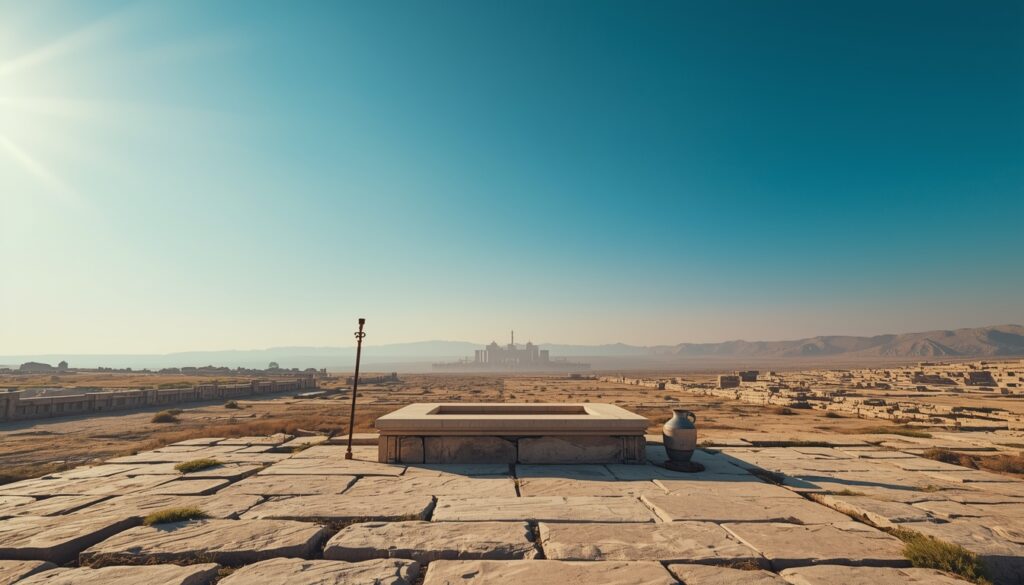
A profound reality of the History of Ishmael in Islam is the geographical location of his dwelling. The Bible identifies his home as the “Wilderness of Paran” (Genesis 21:21). As we explored in Hagar’s Journey, Paran is the ancient name for the mountainous region of Makkah.
Logically, why would a Creator who manages the Origins of the Universe place the firstborn son of His “Intimate Friend” in a barren valley? The answer lies in “Strategic Isolation.” By placing Ishmael in Makkah, Allah was shielding this lineage from the theological corruptions of the surrounding pagan empires. Makkah acted as a “Spiritual Incubator.” This isolation ensured that when the final Messenger arose from Ishmael’s line, his message of Tawhid (Absolute Monotheism) would be a return to the pure Abrahamic source, unpolluted by Hellenistic or Persian philosophies.
3. The Miracle of Zamzam: The Infrastructure of a Nation
The History of Ishmael in Islam is inextricably linked to the miracle of the Zamzam well. Logically, no civilization can survive in a volcanic desert without water. The supernatural appearance of this spring was the “Biological Permission” for Makkah to exist.
From a logical scientific perspective—as analyzed in The Water Cycle in the Quran—Zamzam provided the necessary infrastructure for the nomadic tribes (the Jurhum) to settle and protect Hagar and Ishmael. This allowed Ishmael to integrate into the local culture, learning the purest form of the Arabic language while maintaining his prophetic heritage. Zamzam was the divine anchor that ensured Makkah would become the permanent hub for the Worship in Islam for billions.
4. The Building of the Kaaba: The Logical Center of Gravity
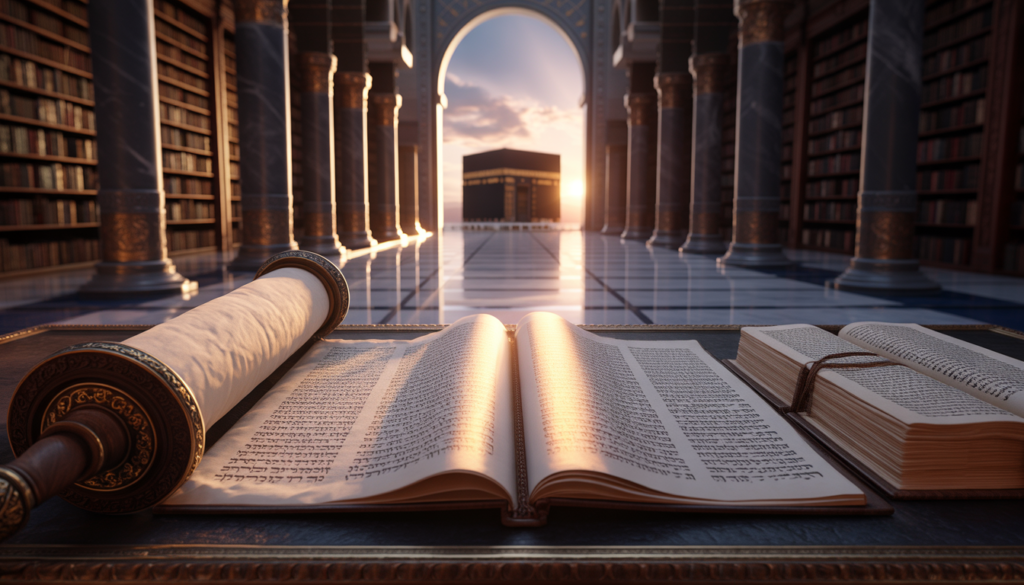
One of the most significant realities in the History of Ishmael in Islam is his partnership with his father, Abraham, in reconstructing the Kaaba. The Quran records: “And remember when Abraham and Ishmael were raising the foundations of the House…” (Quran 2:127).
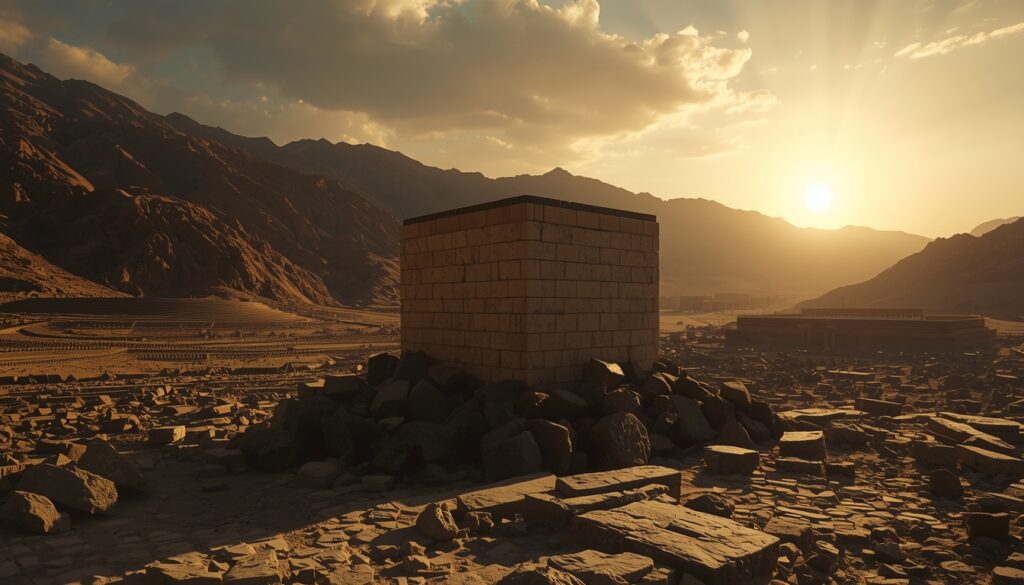
Logically, a universal religion requires a universal “Point of Origin.” By establishing the Kaaba in the valley where Ishmael was raised, Allah created a physical “Center of Gravity” for all mankind. This structure provided the Logic of Prayer with a unified direction (Qibla). The fact that this simple stone cube has remained the most visited site on Earth for millennia is a historical proof of the success of Ishmael’s mission. It proves that the “rejected stone” was always intended to be the “cornerstone” of the global spiritual house.
5. The Lineage of Kedar: Prophet Muhammad as the Fulfillment
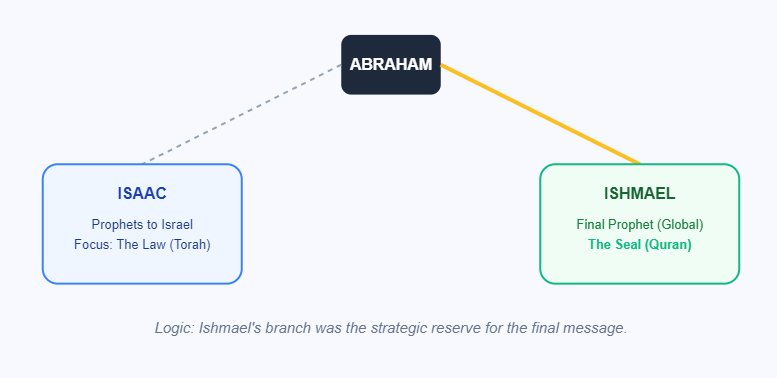
A major driver of the History of Ishmael in Islam is the genealogical link to the final Prophet. Ishmael had twelve sons, the most prominent of whom was Kedar (Qaydar).
Logically, when we analyze Muhammad in the Bible prophecies, we find that the “Glory of Kedar” (Isaiah 21:16) and the “villages of Kedar” (Isaiah 42:11) are explicitly mentioned in the context of a new revelation and a new song. Muhammad (peace be upon him) was the most famous descendant of Kedar in history. The History of Ishmael in Islam is the story of a long “Prophetic Wait.” The lineage was preserved and kept pure in the desert for 2,500 years until the world was ready for the Logic of Final Revelation. This precise genealogical fulfillment is a primary sign for the Sincerity of Prophet Muhammad.
6. The Logic of the Sacrifice: Sincerity and Submission
The narrative of the History of Ishmael in Islam reaches its emotional and logical peak during the event of the sacrifice (Adha). In the Islamic tradition, it was Ishmael, the firstborn, who willingly submitted to the divine command alongside his father.
Logically, this event established the “Standard of Sincerity” for all future believers. Ishmael’s response—“O my father, do as you are commanded; you will find me, if Allah wills, of the steadfast” (Quran 37:102)—is the ultimate definition of Islam (submission). This act proved that the Ishmaelite branch was defined by a specific quality of soul: total surrender to the One who is High above His Throne. This event is commemorated annually in the 5 Pillars of Islamic Faith through the Hajj, ensuring that the Logic of Suffering and Trial is remembered as the path to divine honor.
7. Correcting the Narrative: Human Servant vs. “Wild” Man
Finally, the History of Ishmael in Islam provides a vital “Textual Correction.” In later biblical translations, Ishmael is described as a “wild man” whose hand is against everyone (Genesis 16:12).
Logically, this description is inconsistent with the character of a son chosen by Allah to build His House. Islam restores the dignity of Ishmael, describing him as “truthful to his promise” and a “messenger and a prophet” (Quran 19:54). By removing the derogatory tribal biases found in previous scriptures—as analyzed in the Preservation of the Bible and Quran—Islam reveals the “Truth Clearly.” Ishmael was not a man of conflict, but a man of peace and absolute monotheism who prepared the world for the Why Islam answer.
Conclusion: The Firstborn’s Legacy
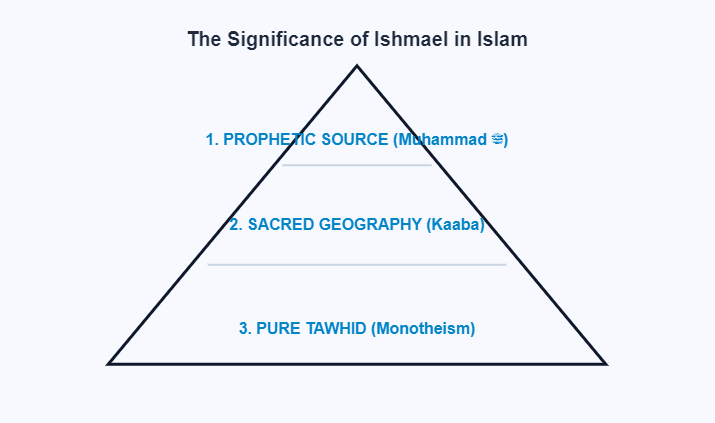
The scholarly investigation into the History of Ishmael in Islam leads to an inescapable rational verdict: Ishmael was the divinely chosen guardian of the final prophetic line. From the strategic isolation of Makkah to the building of the Kaaba and the birth of Muhammad, his life was a sequence of logical necessities to prepare for the finality of truth.
For the skeptical mind, the story of Isma’il is an invitation to look at the “other branch” of the Abrahamic tree. By recognizing the role of the firstborn, the seeker finds the missing link in the history of revelation. Allah, the Most High, who is established over His Throne, has honored Ishmael by making his legacy the global center of worship. By embracing the Logic of Islam and Human Logic, we see that the parched valley of Makkah was never empty; it was full of the promise that would eventually illuminate the entire world.








Leave a Reply