
This research paper is part of Truth Clearly’s commitment to providing an authentic Islamic perspective on theology and history. We adhere to rigorous academic standards, relying exclusively on the Quran, authentic Prophetic traditions, and verified historical sources to provide clarity for the rational seeker.
In the modern world, the 1948 Universal Declaration of Human Rights is often hailed as the first definitive statement of global dignity and equality. However, for the skeptical Western reader, the legal historian, or the seeker of social justice, a rigorous logical inquiry into The Farewell Sermon (Khutbat al-Wada) of Prophet Muhammad reveals a staggering reality. Delivered in 632 CE, this single address established a comprehensive human rights framework that outpaced the modern declaration by over thirteen centuries.
In the Sunni Athari worldview, we recognize Muhammad as a mortal messenger who faithfully conveyed the final revelation from Allah—the Most High, who is established over His Throne. The Farewell Sermon was not merely a political speech; it was a divine summary of the Purpose of Life and a blueprint for a just public order. This article explores seven revolutionary truths of the sermon, demonstrating how it provided a logical foundation for racial equality, economic justice, and the protection of the weak long before the Enlightenment.
Table of Contents
1. The Logic of Universal Equality: Beyond Race and Lineage
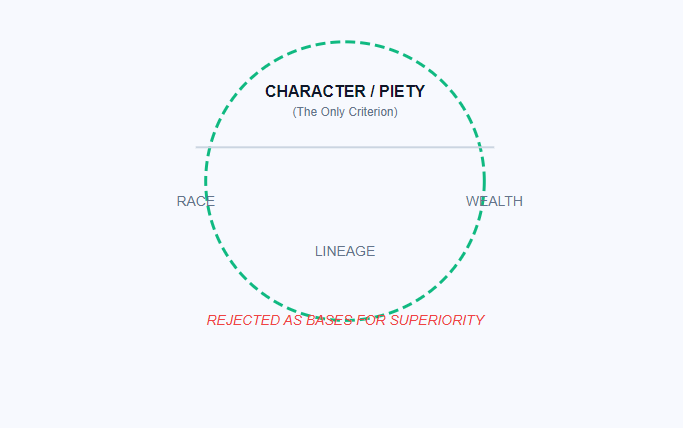
The primary logical pillar of The Farewell Sermon is its total dismantling of tribalism and racism. In a world defined by the “Logic of Bloodline,” Muhammad declared:
“All mankind is from Adam and Eve. An Arab has no superiority over a non-Arab, nor a non-Arab has any superiority over an Arab… except by piety and good action.”
Logically, this was the first radical declaration of universal biological equality. By anchoring human value in “Character” rather than “DNA,” the Prophet established the most stable foundation for Islam and Human Rights. This reflects the Sincerity of Prophet Muhammad, as he used his peak authority to strip his own tribe of their historical privileges, aligning human society with the Concept of God in Islam as the One Lord of all.
2. The Sanctity of Life and Property: A Sacred Trust
A profound reality in The Farewell Sermon is the legal status given to the individual. Muhammad declared that the blood, property, and honor of every human are as “sacred as this day, this month, and this city (Makkah).”
Logically, this elevated human life from a tribal commodity to a “Divine Trust” (Amanah). It established the “Rule of Law” where no individual or ruler could arbitrarily seize the life or wealth of another. This provided the logical framework for Sharia Law in Islam, focusing on the preservation of the five essential necessities of civilization. This sacredness is a credential for the Authenticity of the Quran as a guide for peace.
3. The Revolutionary Rights of Women in Islam
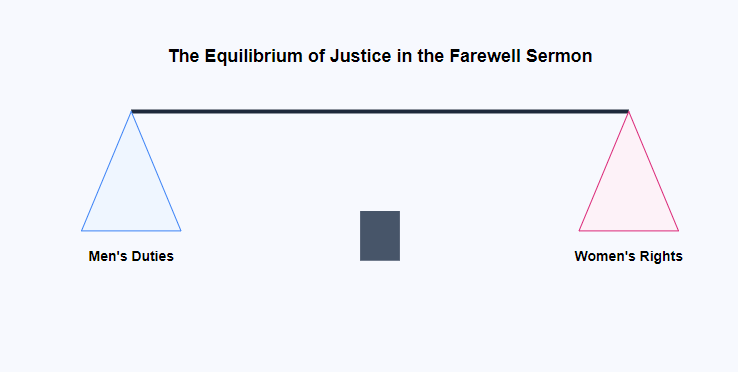
Centuries before the Western world debated the legal agency of women, The Farewell Sermon provided specific mandates for their protection. The Prophet stated: “O People, it is true that you have certain rights with regard to your women, but they also have rights over you.”
Logically, this established “Complementary Equity.” By commanding men to “treat women well and be kind to them,” Muhammad was not offering a suggestion, but a legal and spiritual obligation to the One who is High above His Heavens. This revolutionized the Women in Islam paradigm, transforming them from inherited property into honored trustees of the family and society.
4. Economic Justice: The Abolition of Usury (Riba)
The The Farewell Sermon addressed the root cause of systemic poverty: usury. Muhammad declared: “Allah has forbidden you to take usury (Riba), therefore all interest obligations shall henceforth be waived.”
Logically, this was a strike against the “Logic of Exploitation.” By removing the debt cycles that trapped the poor, he created a society where wealth was tied to productive effort and Worship in Islam through charity. This economic stance is supported by Islam and Secularism studies, which show that Islamic economics provides a more resilient social fabric than purely materialist systems.
5. The Logic of Mercy: The Abolition of Blood Feuds
A major sociological reality of the sermon was the immediate termination of tribal vengeance. Muhammad forgave the blood debts of his own clan first, setting the example.
Logically, a civilization cannot exist if it is locked in a perpetual cycle of revenge. By replacing “Tribal Law” with “Divine Justice,” he stabilized the Arabian Peninsula. This act of mercy is a hallmark of Muhammad as a Leader, proving that his goal was to lead humanity toward the Logic of Free Will and forgiveness rather than vengeance.
6. The Logic of Accountability: The Master and the Servant
Muhammad famously addressed the rights of those in servitude, commanding that they be fed and clothed exactly as their masters. Logically, this was the first step toward the eventual abolition of slavery by humanizing the servant and making the master accountable to Allah.
In the Logic of Suffering, trials are universal, but the Prophet ensured that social status did not mean an exemption from moral conduct. This established a culture of empathy that fueled the Islamic Civilization’s Contributions to Science and social care.
7. The Final Handover: The Perfection of the Message
The final reality of The Farewell Sermon was the Prophet’s question to the assembly: “O Allah, have I conveyed the message?” Thousands responded in the affirmative.
Logically, this represents the “Final Accountability” of the prophetic office. He had successfully fulfilled the Prophecies of Muhammad in the Bible and provided a complete way of life. This ensures the Preservation of the Bible and Quran legacy, as the community was now the primary witness to the truth. It was the closing of the Why Islam argument—a perfected religion for a matured humanity.
Conclusion: The Timeless Charter
The scholarly inquiry into The Farewell Sermon leads to a profound rational verdict: this address was the first truly universal charter of human rights. By prioritizing character over race, justice over usury, and dignity over lineage, it provided a map for a flourishing civilization.
For the skeptical reader, the sermon is a standing invitation to investigate the Sincerity of the Messenger. Muhammad was not a man of his time; he was a man for all time, guided by the All-Knowing Creator who is High above His Throne. By recognizing the “Truth Clearly” in this ancient sermon, we find the logical keys to solving the modern world’s deepest ethical crises.













Leave a Reply