
This research paper is part of Truth Clearly’s commitment to providing an authentic Islamic perspective on theology and history. We adhere to rigorous academic standards, relying exclusively on the Quran, authentic Prophetic traditions, and verified historical sources to provide clarity for the rational seeker.
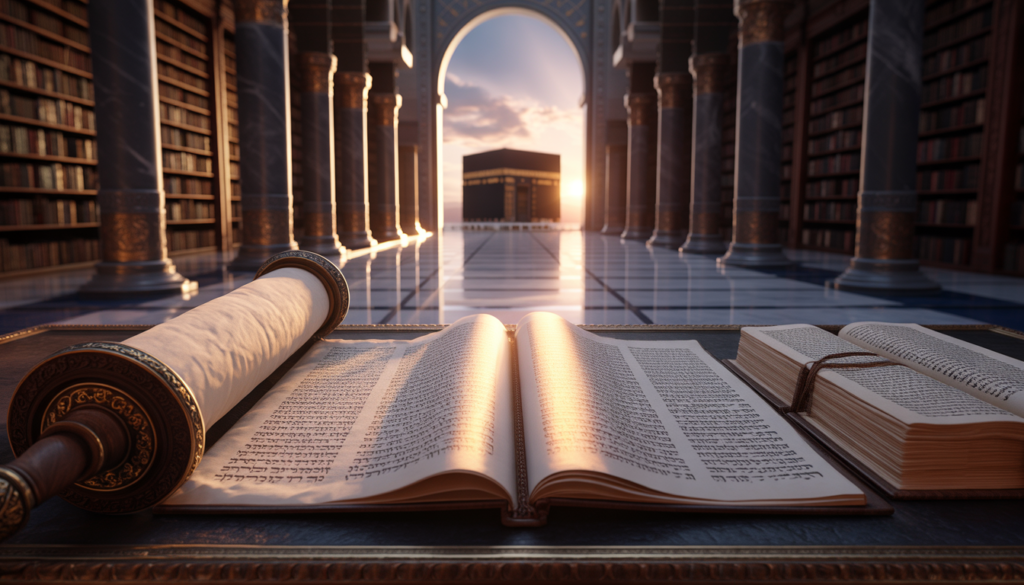
In the study of comparative religion, the question of textual integrity is the foundation of all theological claims. For the skeptical seeker or the academic researcher, the primary inquiry is often: “How can we be certain that the words we read today are the same words revealed thousands of years ago?” The Preservation of the Bible and Quran presents a fascinating historical case study in the transmission of information across centuries.
Islam teaches a unique perspective on this matter. It acknowledges the divine origin of the Torah given to Moses and the Injil (Gospel) given to Jesus. However, it posits that these previous scriptures were not divinely protected from the secondary effects of translation, loss, and human intervention. In contrast, the Quran is presented as the final, protected “Criterion” (Al-Furqan). This article explores seven profound logical realities regarding the Preservation of the Bible and Quran from a historical and scriptural lens.
Table of Contents
1. The Distinction Between Revelation and Biographical Accounts
To understand the Preservation of the Bible and Quran, we must define what “scripture” means in each tradition. In the Sunni Athari worldview, the Quran is the literal and uncreated Speech of Allah, which He spoke with Letter and Voice. It is a direct first-person address from the Creator, who is High above His Throne, to humanity.
In contrast, the modern New Testament is largely composed of biographical accounts (Gospels) written by followers and letters (Epistles) written by Paul and others. Logically, there is a difference between a direct transcript of Speech and a historical narrative written about a person. While the original Injil revealed to Jesus was the Speech of Allah, the records available today are human reconstructions of his life and teachings. This fundamental difference in the nature of the text is the first step in analyzing the Preservation of the Bible and Quran.
2. The Language Barrier: Classical Arabic vs. Lost Hebrew and Greek
Language plays a critical role in the Preservation of the Bible and Quran. The Quran was revealed in Classical Arabic, a language that was meticulously codified and remains accessible to over a billion people today. Because the language is “alive” and the text is used daily in prayer, the meaning and phonetics of the Quran have been frozen in time.
The previous scriptures, however, faced a different fate. Jesus spoke Aramaic, yet the earliest surviving manuscripts of the Gospels are in Koine Greek—a language he did not use to preach. The Old Testament faced similar transitions from ancient Hebrew to various translations. Logically, every step of translation introduces the potential for “interpretative drift,” where the original nuance of the Divine Speech is lost. This is why the Authenticity of the Quran relies on it being preserved in its original, revealed tongue.
3. Oral Tradition: The Logic of Mass Transmission (Tawatur)
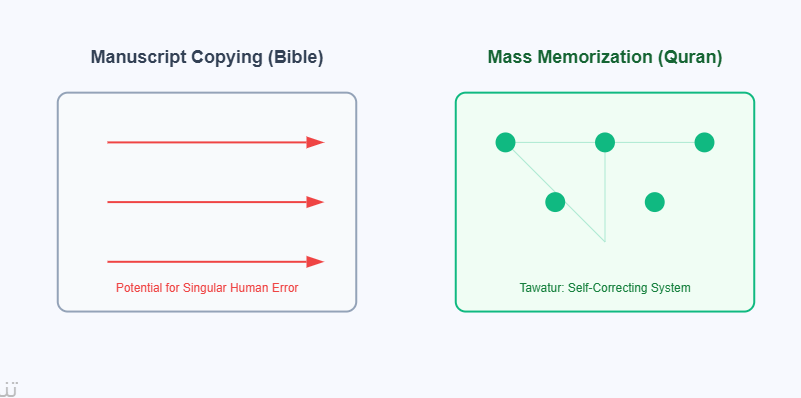
The most powerful logical proof in the Preservation of the Bible and Quran dialogue is the method of transmission. The Bible was largely transmitted through a small number of manuscripts held by a select group of scribes and clergy. If a mistake was made in a manuscript, it could be copied into others without being detected for centuries.
The Quran utilized a revolutionary system called Tawatur (mass transmission). From the moment of its revelation, the Quran was memorized by thousands of people simultaneously. If a scribe made a typo in a written copy, the collective memory of the Huffaz (memorisers) would immediately correct it. This “peer-review” system ensured that the Authenticity of Hadith and the Quran remained unshakeable. Logically, it is impossible for thousands of independent witnesses across different continents to agree on the same mistake.
4. The Role of Ecumenical Councils and Canonization
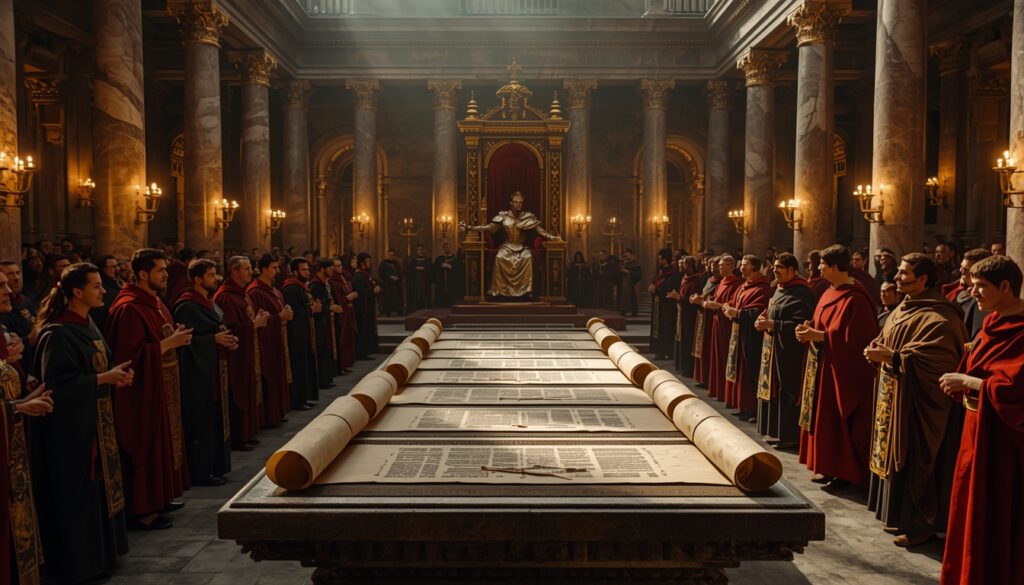
When analyzing the Preservation of the Bible and Quran, we must look at who decided what stays in the book. The Bible’s “Canon”—the list of accepted books—was finalized through a series of human committees and councils, such as the Council of Nicaea, as documented by Britannica’s history of biblical canon. These councils had to choose between hundreds of competing manuscripts and traditions.
The Quran, however, had no such process. The chapters and verses were arranged by the Prophet Muhammad himself under divine guidance. By the time of his death, the entire Quran was memorized and recorded. There was never a “Council of Scholars” that voted on which verses to include or exclude. This immediate and unified compilation is a cornerstone of Islamic logic regarding why the Quran remains the “Seal” of all revelation.
5. Scriptural “Corrective” vs. Scriptural “Corruption”
A logical question arises: “Why would Allah allow the previous books to be altered?” The Preservation of the Bible and Quran should be seen as a pedagogical process. Islam teaches that the previous books were sent for specific nations and specific times. As society evolved, the need for a final, universal, and eternally protected law became necessary.
Allah, the Most Wise, allowed the previous scriptures to be subject to human handling as a test for those nations. However, when the final message was sent to all of humanity, He took the preservation upon Himself: “Indeed, it is We who sent down the message and indeed, We will be its guardian” (Quran 15:9). This divine protection is what allows the Quran to act as a “Criterion” to verify what remains of the truth in the Muhammad in the Bible prophecies.
6. The Manuscript Evidence: A Comparative Gap
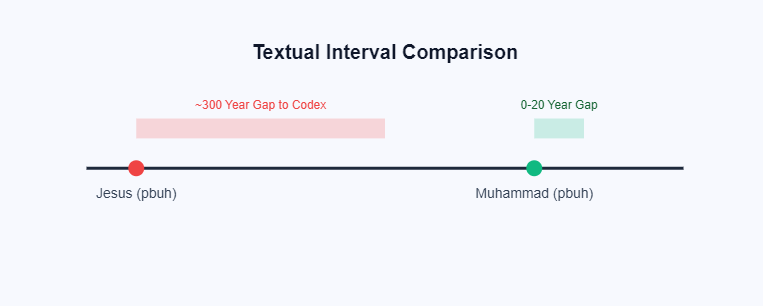
Modern textual criticism provides objective data on the Preservation of the Bible and Quran. For the New Testament, the gap between the original events and the earliest complete manuscripts (like Codex Sinaiticus) is nearly 300 years. During this “silent interval,” various versions and sectarian edits emerged.
In contrast, we possess Quranic manuscripts that carbon-date back to the first century of Islam, such as the Birmingham and Topkapi manuscripts. When these ancient parchments are compared to the Quran printed today, they are identical. Logically, the shorter the gap between the source and the manuscript, the higher the degree of historical certainty. This evidence supports the Concept of God in Islam as a Being whose decree is manifest in history.
7. The Logical Purpose of the “Muhaimin” (Guardian)
The final reality of the Preservation of the Bible and Quran is the concept of the Quran as a Muhaimin (Guardian/Witness) over previous scriptures. Logically, if you have a series of evolving laws, you need a final reference point to determine which parts of the old laws are still valid and which were altered by man.
The Quran fulfills this logical need. It confirms the virgin birth of Jesus in Islam and the nobility of the prophets while correcting the theological deviations like the Trinity or original sin. By being the only preserved text, the Quran serves as the ultimate anchor for all Abrahamic faith, bringing the Five Pillars of Islamic Faith into a coherent, historically verified framework.
Conclusion: The Finality of Truth
The study of the Preservation of the Bible and Quran leads to a clear rational verdict. While the Bible contains remnants of divine truth and prophetic history, its journey through translation and sectarian councils has left it as a collection of human-handled records. The Quran, through its unique linguistic preservation, mass oral transmission, and immediate compilation, stands as a unique historical anomaly.
For the skeptical seeker, the preserved nature of the Quran is a standing miracle. It invites the world to read a text that has not changed by a single letter in 1,400 years—a claim that no other book in human history can logically make. In the end, the Preservation of the Bible and Quran is not just about ink and parchment; it is about the endurance of the Divine Voice in a changing world.







Leave a Reply