
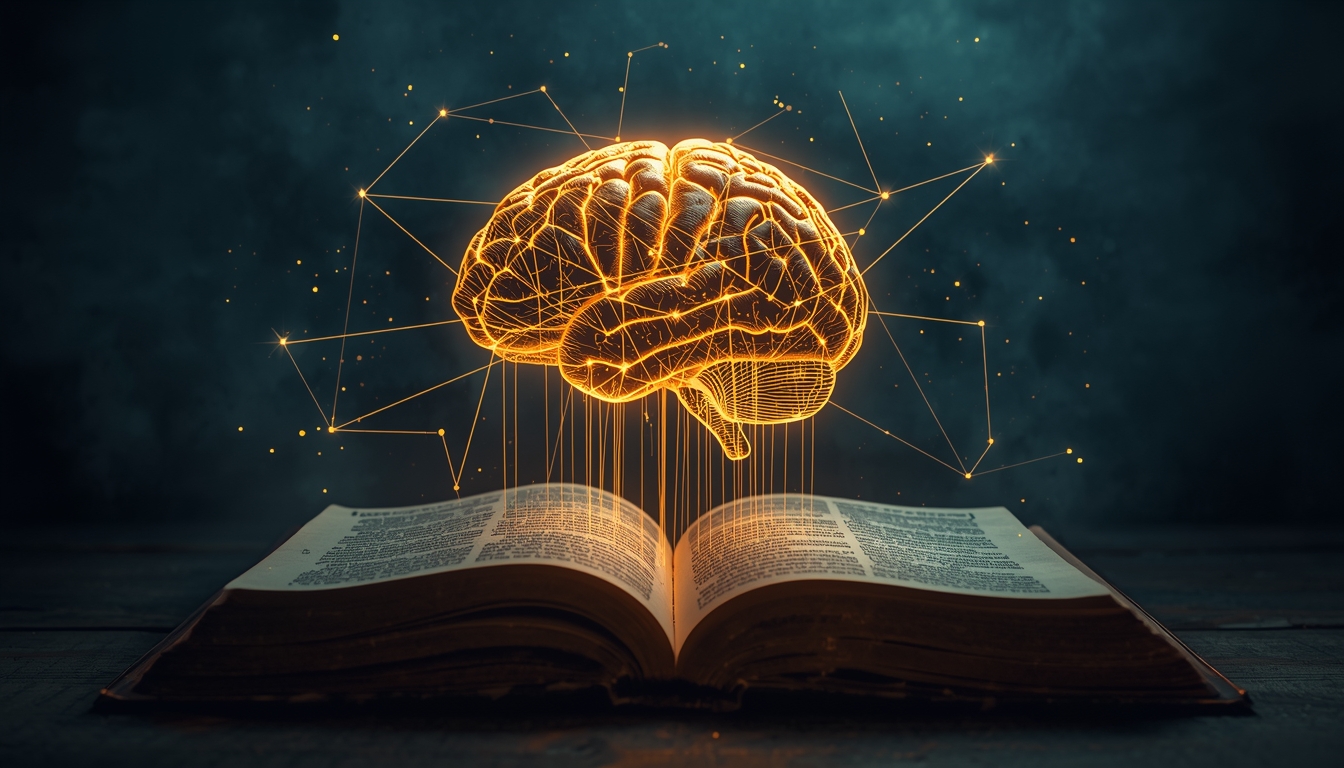
At Truth Clearly, we believe that intellect is a divine gift. This article explores how the Islamic tradition encourages observation, critical thinking, and logical deduction as fundamental pathways to understanding the Creator.
In the contemporary intellectual landscape, a pervasive and persistent myth suggests that religious commitment requires a “sacrifice of the intellect.” For the skeptical Western reader, the modern scientist, or the agnostic seeker, faith is often perceived as the antithesis of reason—a “blind leap” into the dark where logic must be abandoned for the sake of dogma. However, a rigorous inquiry into the relationship between Islam and Human Logic reveals a paradigm where reason is not merely an option, but a divinely mandated obligation. The Quran does not ask the human mind to shut down; it demands that it wake up.
In the Sunni Athari worldview, we recognize that Allah—the Most High, who is established over His Throne and is distinct from His creation—is the Source of both Revelation (Wahy) and the Human Intellect (‘Aql). Since both originate from the same Creator, they can never truly be in conflict. The Islam and Human Logic framework asserts that the primary function of the mind is to recognize the “Signs” of the Creator through observation, deduction, and sincere reflection. This article explores seven profound reasons why Islam rejects blind faith and instead calls for a conviction grounded in rational certainty.
Table of Contents
1. The Divine Mandate for Tadabbur (Critical Reflection)
The primary logical pillar of Islam and Human Logic is the recurring Quranic command to “reflect,” “think,” and “understand.” Unlike systems that discourage questioning, the Quran contains over 750 verses that urge humanity to use their mental faculties. It repeatedly challenges its readers with rhetorical questions: “Do you not then use your reason?” and “Do you not then reflect?”
Logically, a book that claims to be the literal and uncreated Speech of Allah—as explored in the Authenticity of the Quran—would not invite such intense scrutiny if it were a product of human fabrication. By inviting the human mind to examine its claims, Islam establishes a “Logic of Investigation.” Faith in Islam is intended to be a “Conclusion” reached after observing the evidence, not a “Premise” that must be accepted without verification. This intellectual honesty is a cornerstone of the Sincerity of Prophet Muhammad, who provided clear proofs to his contemporaries.
2. The Primacy of the Fitrah: The Soul’s Intuitive Logic
The concept of Islam and Human Logic is deeply anchored in the Fitrah—the innate human nature. Islamic theology posits that every human being is born with a “pre-programmed” logical compass that recognizes the existence of a single Creator. This is not a learned bias, but a biological and spiritual intuition that aligns with the external reality of the universe.
Modern cognitive science and epistemology discuss the concept of “basic beliefs.” Logically, Islam aligns with these primary intuitions. When a person engages with Tawhid (Absolute Monotheism), they are not adopting a convoluted mystery; they are returning to their soul’s original, logical state. Islam clarifies the Fitrah, moving the individual from a vague sense of a “Higher Power” to a structured rational conviction in the One who is High above His Heavens.
3. The Rejection of Blind Imitation (Taqlid)
A hallmark of Islam and Human Logic is its fierce critique of blind following. The Quran consistently reprimands those who refuse to think because they prefer to follow the traditions of their ancestors: “We found our forefathers following a certain way, and we are guided by their footsteps” (Quran 43:22). Islam views the suspension of critical thinking for the sake of social or cultural tradition as a form of intellectual decay.
Logically, if truth is universal, it must be verifiable by every individual intellect. By condemning blind following (Taqlid), Islam encourages a “Direct Accountability” between the individual and the Creator. This empowers the human mind to challenge social norms and seek Objective Morality based on evidence rather than peer pressure. This rejection of tribalism was essential for the success of Muhammad as a Leader.
4. Empirical Evidence: The Universe as a Book of Signs
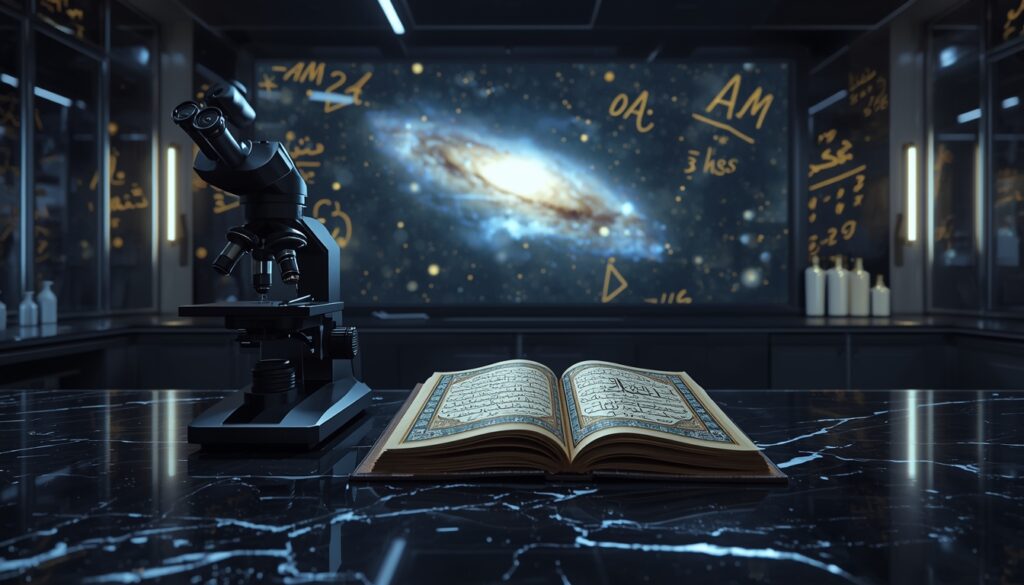
The framework of Islam and Human Logic bridges the gap between the laboratory and the mosque. The Quran directs the human mind to the physical world—the orbits of the stars, the development of the embryo, and the cycle of water—as empirical proofs of the Creator’s Wisdom and Power.
As analyzed in the Scientific Miracles of the Quran, the Quranic descriptions align with modern observations in a way that suggests a source of knowledge that transcends the 7th century. Logically, the “Micro” design of DNA and the “Macro” design of the cosmos are both signatures of the same Author. Islam encourages the scientific method because every discovery in the natural world is a discovery of the “How” behind the Wisdom of Allah.
5. The Logic of Causality: First Cause and Design
A central argument in Islam and Human Logic is the principle of causality. The universe is a complex, finite, and fine-tuned system. Logic dictates that every “Effect” must have a “Cause.” The intricate balance of the universe—as explored in the Origins of the Universe—cannot be the result of a random accident.
Islamic logic argues that “Blind Chance” lacks the will, intelligence, and power to produce “Order.” Only an Intelligent Creator, who is High above His creation and distinct from it, could have initiated the first cause. By following the chain of causality to its end, the human mind reaches the logical necessity of the One God. This is not a mystical leap; it is a rational deduction that satisfies the highest standards of logical inquiry found in Britannica’s analysis of the first cause.
6. Moral Rationality: The Purpose of Human Choice
The Islam and Human Logic dialogue extends to the realm of ethics. If life were a random accident, then morality would be nothing more than a social survival mechanism. However, human beings possess a profound sense of justice and a desire for ultimate meaning that transcends biological needs.
Logically, if our minds were designed for nothing more than survival, we would not possess the capacity to contemplate eternity or moral self-sacrifice. Islam provides the Purpose of Life as a “Test of Choice.” By providing a system of Divine Justice and the Afterlife, Islam offers the only framework where human morality has a final, logical destination. Accountability is the rational consequence of being gifted with Reason and Free Will.
7. The Logical Consistency of Miracles
Finally, the Islam and Human Logic framework addresses the role of miracles. In Islam, miracles are not “magical tricks” but “Logical Signatures.” They are divinely allowed events that suspend natural laws to validate the authenticity of a messenger.
When we analyze the miracles of Jesus in Islam or the linguistic challenge of the Quran, we see events that are perfectly consistent with the power of the One who created the laws of nature in the first place. Logically, if God created the law, He has the authority to suspend it to communicate with His creation. This ensures that the “Signs” of the Prophets are recognized as credentials for those who use their minds.

Conclusion: Reason as the Gateway to Faith
The study of Islam and Human Logic leads to a profound rational verdict: faith in Islam is the highest form of intellectual engagement. It is a worldview that celebrates the human mind as a divine gift and charges it with the task of uncovering the Truth. Islam does not offer a comfortable delusion; it offers a rigorous, evidence-based clarity.
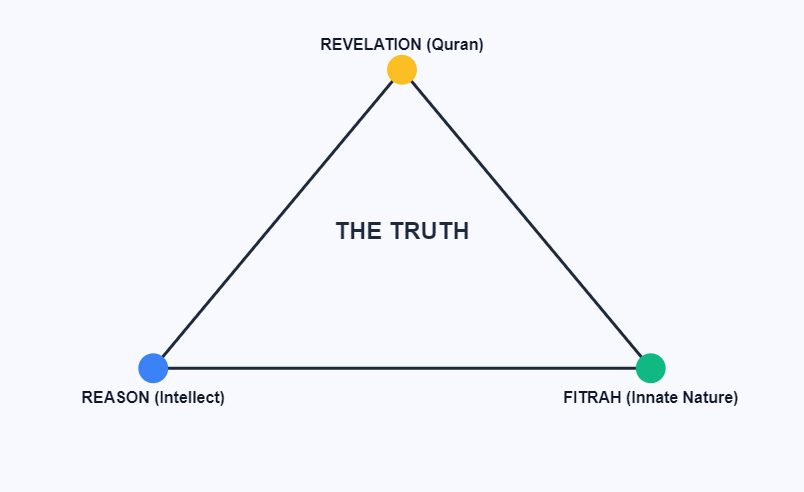
For the skeptical mind, the Islamic message is a standing invitation. It asks you to observe the universe, analyze the scripture, and listen to your innate soul. If these three sources agree, then faith is not a leap into the dark—it is a step into the Light. By harmonizing Science and Scripture, Islam provides a unified theory of existence where every thought and every star points toward the One True God, the Most High, who created humanity to know Him through the power of reason.












Leave a Reply