
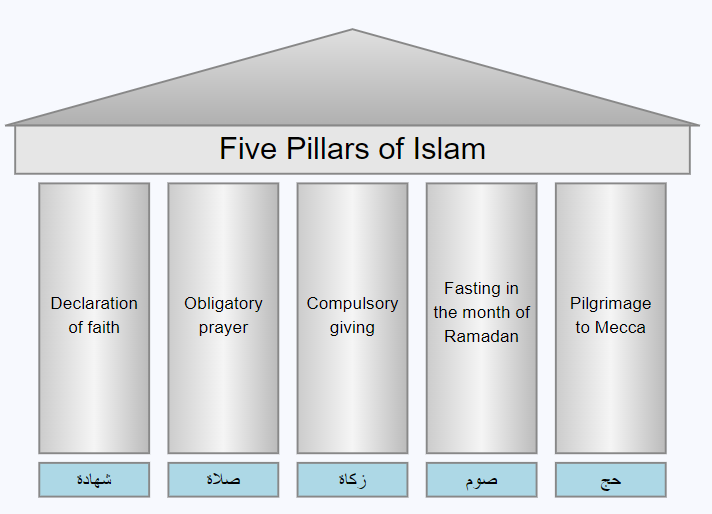
When exploring Islam from the outside, the religion is often reduced by mainstream media to a set of rigid rules or mystical dogmas. However, for the skeptical Western reader, academic, or spiritual seeker, understanding Islam requires looking at its foundational framework. At the heart of this global religion are the Five Pillars of Islamic faith (Arkan al-Islam).
These pillars are not merely arbitrary rituals. They represent a deeply logical, highly structured system designed to align a person’s spiritual mindfulness, social responsibility, and physical discipline. Just as a building requires a solid foundation to stand, the Islamic way of life is entirely supported by the Five Pillars of Islamic faith.
In this guide, we will explore each pillar through a rational and sociological lens, stripping away cultural misconceptions to reveal their core purposes.
Table of Contents
1. Shahada: The Declaration of Faith (The Ideological Pillar)
The first and most crucial of the Five Pillars of Islamic faith is the Shahada. It is a simple, profound verbal declaration: “There is no deity but God (Allah), and Muhammad is the Messenger of God.”
To a skeptical mind, this might seem like standard religious initiation. However, logically, the Shahada establishes the ultimate concept of Tawhid (absolute monotheism). It is a declaration of spiritual liberation. By stating that there is no deity but the One Creator, a Muslim philosophically frees themselves from the worship of material wealth, societal status, human leaders, or the ego.
If you have read about the Islamic view on Prophet Jesus (Isa), you will notice that this strict monotheism is the exact reason Islam views Jesus as a mighty messenger rather than a physical incarnation of the Divine. The Shahada ensures that the line between the Creator and the created is never blurred.
2. Salah: The Anchor of Mindfulness (The Physical Pillar)
The second of the Five Pillars of Islamic faith is Salah, the performance of five daily prayers. These are spread throughout the day: dawn, noon, mid-afternoon, sunset, and night.
Why five times? From a modern psychological perspective, Salah functions as an ultimate form of mandated mindfulness. In a world driven by capitalism, distractions, and endless stress, stopping five times a day forces an individual to disconnect from the material world and reconnect with the eternal.
It is a physical, vocal, and spiritual meditation. The physical movements (standing, bowing, prostrating) ensure that both body and soul are involved in the act of submission. Prostration (touching the forehead to the ground) is the ultimate physical manifestation of humility, constantly reminding the believer of their temporary existence and ultimate return to the Earth.
3. Zakat: The Economics of Empathy (The Social Pillar)
Perhaps the most socially impactful of the Five Pillars of Islamic faith is Zakat, or obligatory almsgiving. Islam does not rely solely on voluntary charity (though it is highly encouraged). Instead, it institutes a mandatory wealth tax of 2.5% on accumulated, stagnant wealth (not income) that has been held for over a year.
From a sociological and economic standpoint, Zakat is a mechanism for wealth redistribution. It prevents the hoarding of capital by the ultra-rich and ensures a continuous flow of resources to the most vulnerable members of society (the poor, the indebted, refugees, etc.).
By categorizing Zakat as a “pillar of faith” rather than a secular tax, Islam ties economic justice directly to spiritual salvation. A Muslim’s wealth is not truly purified until the portion belonging to the poor has been given away.
4. Sawm: The Logic of Self-Restraint (The Psychological Pillar)
The fourth pillar is Sawm, the mandatory fasting during the ninth lunar month of Ramadan. From dawn until sunset, Muslims abstain from food, water, and marital relations.
To an outsider, fasting without water for up to 18 hours might seem extreme. However, the logic behind this pillar of the Five Pillars of Islamic faith is mastery over the self. Human beings are fundamentally driven by basic instincts: hunger, thirst, and desire. By proving to oneself that these primal urges can be controlled for the sake of God, a person develops immense psychological resilience (Taqwa or God-consciousness).
Furthermore, it creates universal empathy. Hunger is the great equalizer. When a billionaire and a minimum-wage worker both feel the same sharp pangs of hunger in the afternoon, it cultivates a profound, visceral compassion for those who starve involuntarily around the globe.
5. Hajj: The Ultimate Symbol of Equality (The Universal Pillar)
The final component of the Five Pillars of Islamic faith is Hajj, the pilgrimage to the sacred city of Mecca. It is obligatory at least once in a lifetime for those who are physically and financially able.
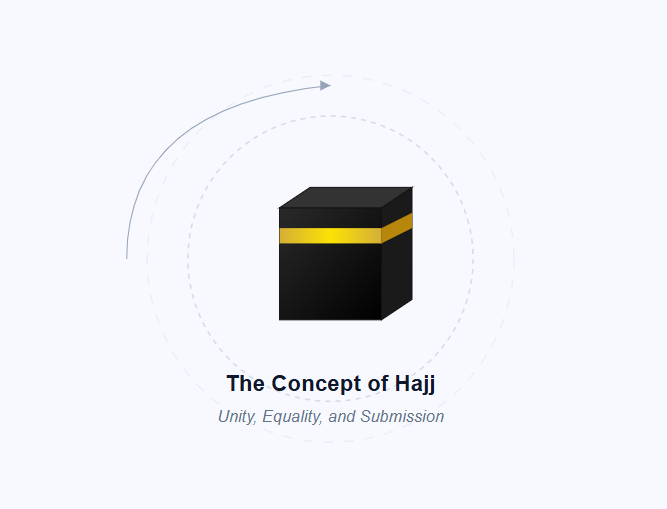
Hajj is arguably the largest annual, peaceful gathering of humanity. From a sociological viewpoint, it is a masterpiece designed to destroy racism, classism, and nationalism. Before entering the sacred precincts, millions of pilgrims strip off their tailored clothes and don identical, simple white garments (Ihram).
In this state, a king cannot be distinguished from a janitor. People of all races, languages, and social classes stand shoulder-to-shoulder, stripping away all earthly titles. It is a dress rehearsal for the Day of Judgment, reminding believers of their ultimate equality before God.
Conclusion
The Five Pillars of Islamic faith are not merely a checklist of religious duties. Together, they form a comprehensive matrix for human flourishing.
- Shahada disciplines the intellect.
- Salah disciplines the soul and time.
- Zakat disciplines the economy.
- Sawm disciplines the body and ego.
- Hajj disciplines society by enforcing equality.
For the skeptical mind looking to understand Islam, recognizing the profound logic, discipline, and social justice embedded within these five pillars is the first step toward grasping the true essence of the Islamic worldview.
Leave a Reply